Head to head
Indo-Scandinavian vs Art Deco Glam
Pale timber, soft daylight and muted green — Nordic restraint adapted for Indian light, dust and humidity. Against that: Fluting, fans and geometry. Lacquered colour, brass inlay lines and mirror used as architecture. Eight rooms, both styles, side by side.

Room by room
Where these two diverge
Same brief, same room, two answers. Layout, core material and the one move that defines each.
Modular Kitchen

- Layout
- Open L-Shaped
- Core material
- Birch-faced ply
- Shutter finish
- Matt laminate, square edge
What changes: Pale birch and chalk two-tone, upper units in white.
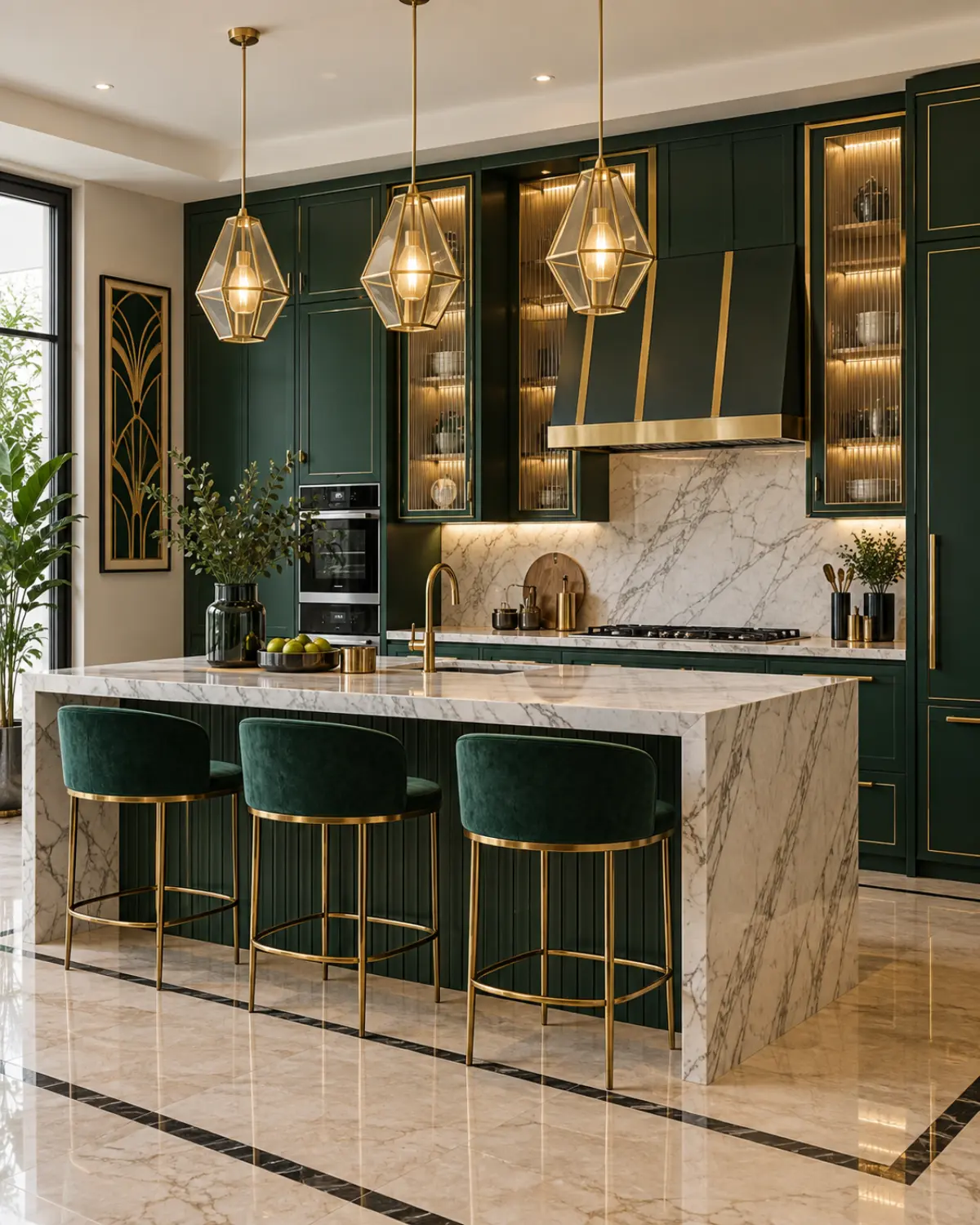
- Layout
- Straight-Line
- Core material
- BWP ply with lacquer core
- Shutter finish
- Fluted lacquer with brass reveal
What changes: Fluted emerald lacquer shutters with brass inlay lines.
Wardrobe
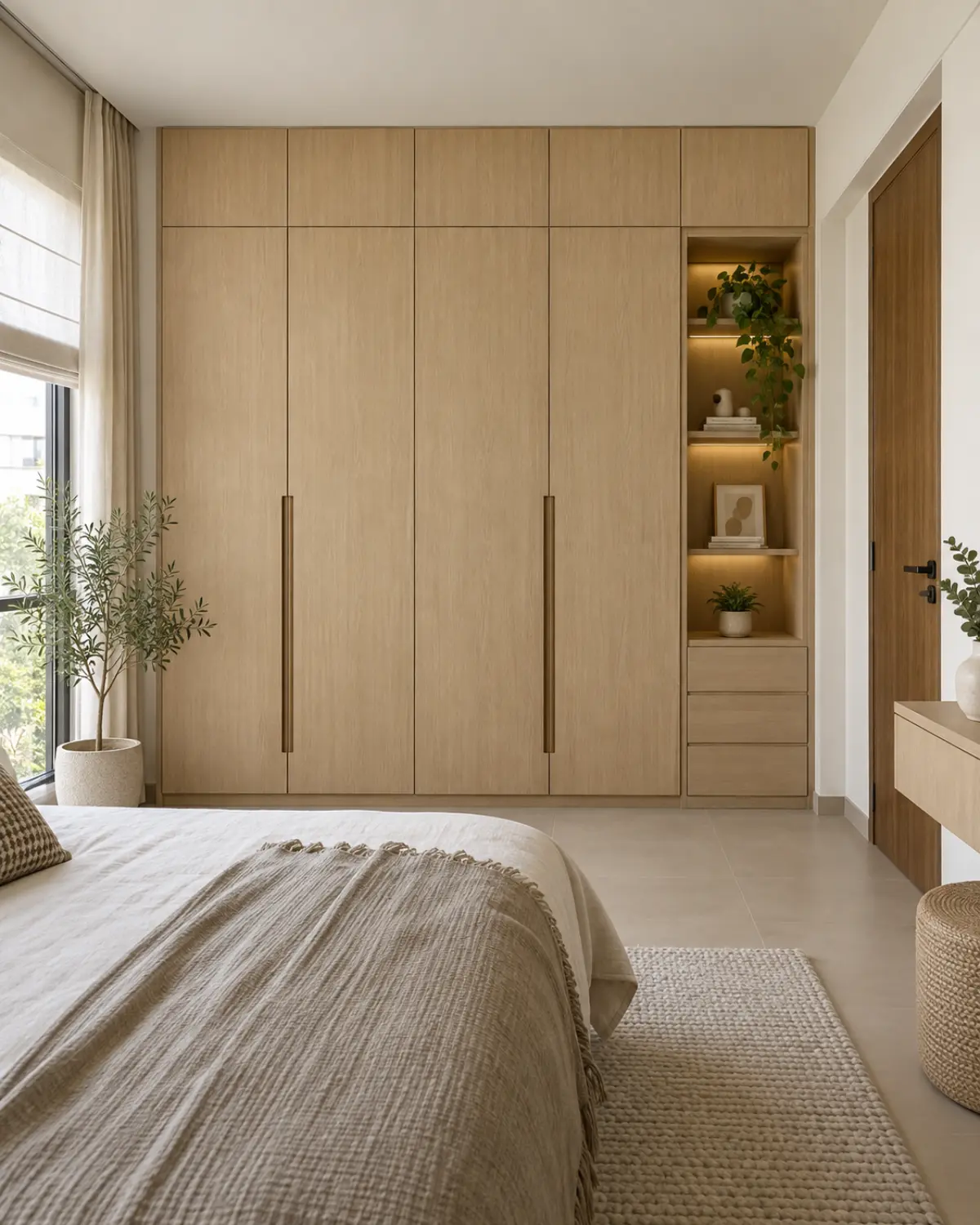
- Layout
- Loft-integrated sliding
- Core material
- Birch ply, exposed edge
- Shutter finish
- Pale birch laminate
What changes: Exposed birch ply edges left honest and sealed.

- Layout
- Open dresser with fluting
- Core material
- BWP ply with lacquer front
- Shutter finish
- Emerald lacquer, fluted
What changes: Vertical fluting in lacquer with brass inlay between panels.
Bathroom

- Layout
- Single vanity, walk-in shower
- Floor
- Pale birch-tone porcelain plank
- Wall
- Chalk subway, stack bond
What changes: Warm birch against chalk tile to soften the space.
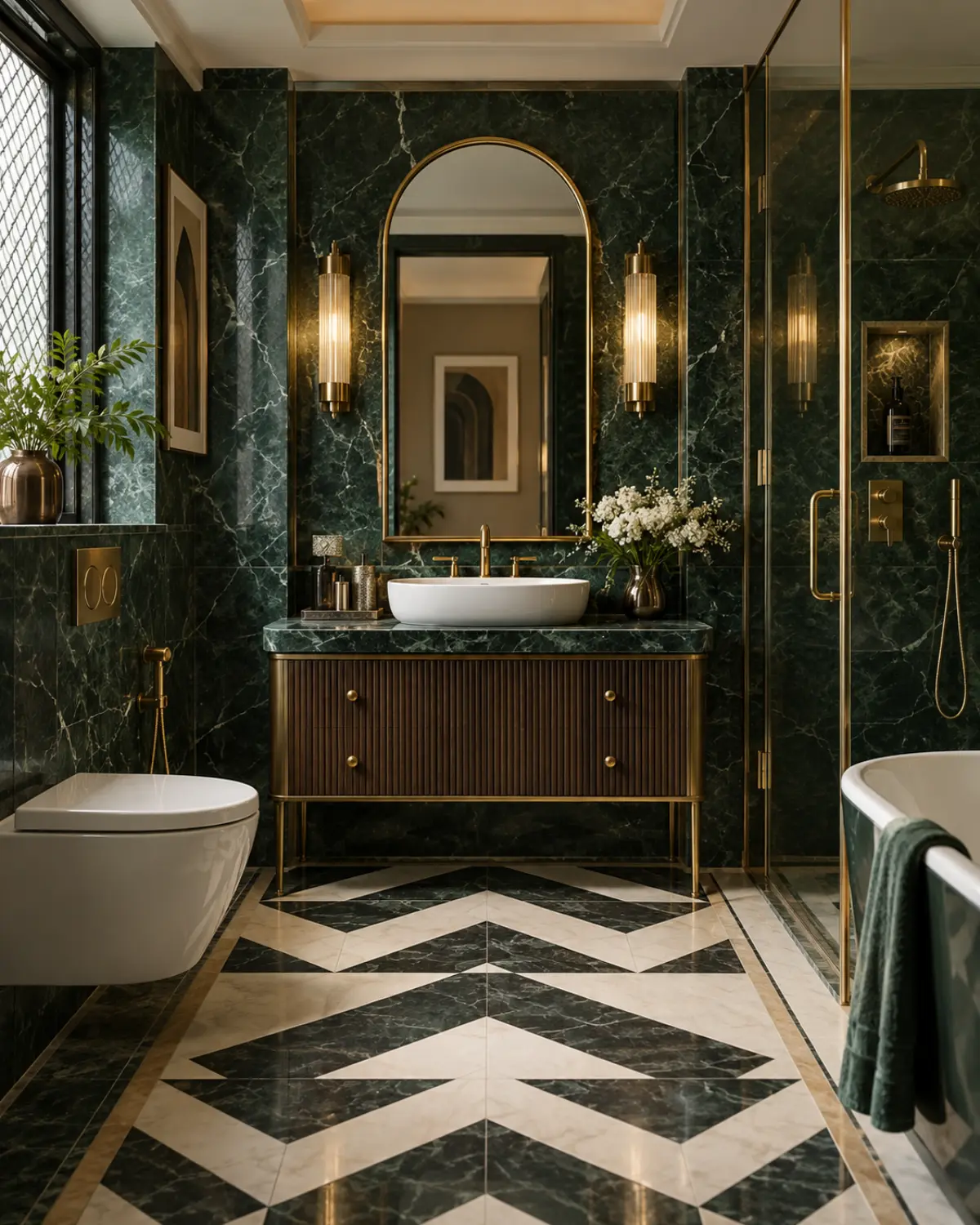
- Layout
- Powder room
- Floor
- Emerald and ivory chequer
- Wall
- Fluted ivory tile with brass trim
What changes: Chequerboard floor set on the diagonal.
Living Room
- Layout
- Compact with window seat
- Seating
- Birch-frame sofa, sage upholstery
- Feature wall
- Birch batten with open shelving
What changes: Pale timber and chalk with sage textiles.
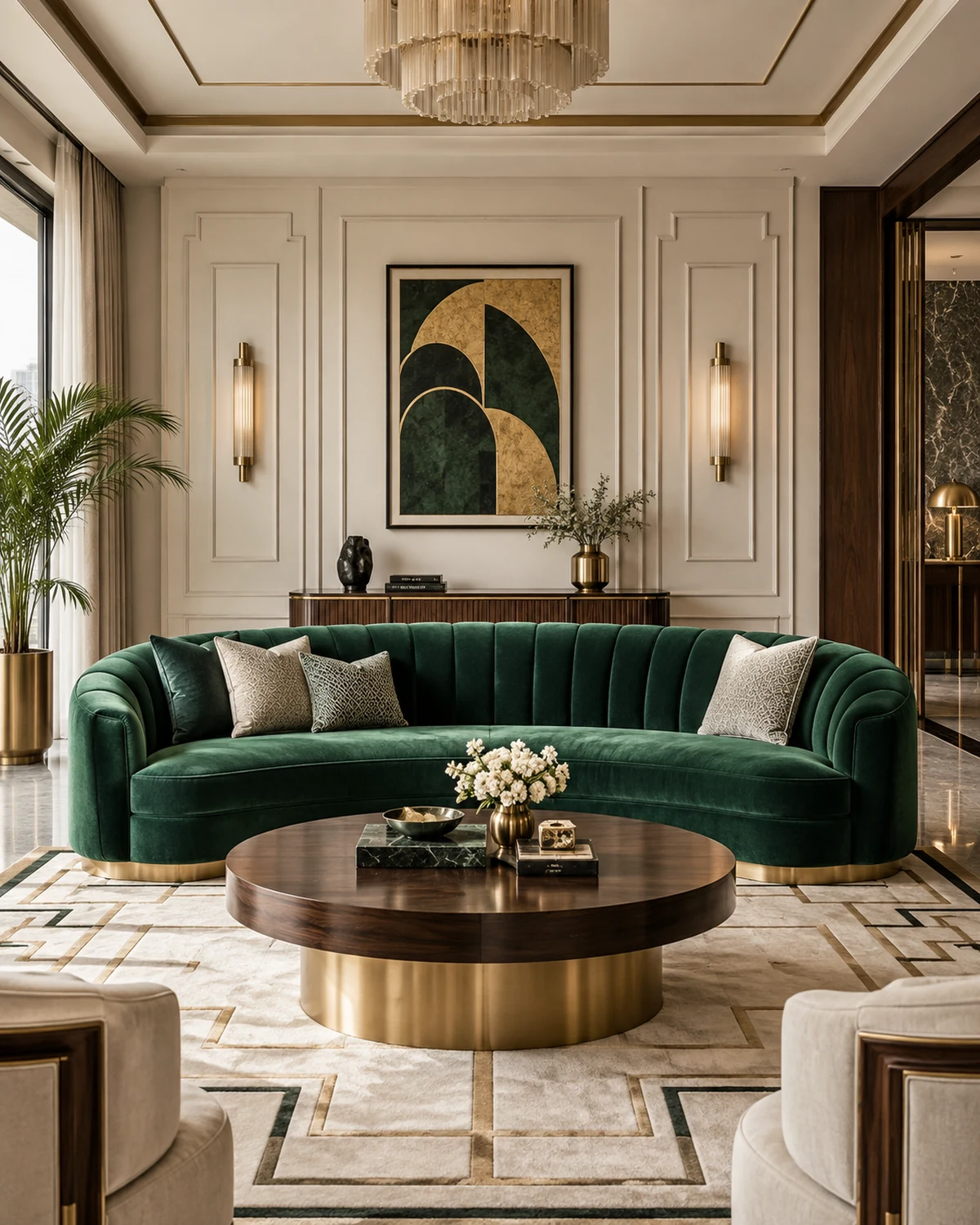
- Layout
- Lounge with bar
- Seating
- Emerald velvet curved sofa
- Feature wall
- Fluted lacquer with brass inlay
What changes: A curved emerald sofa as the centrepiece.
Pooja Room
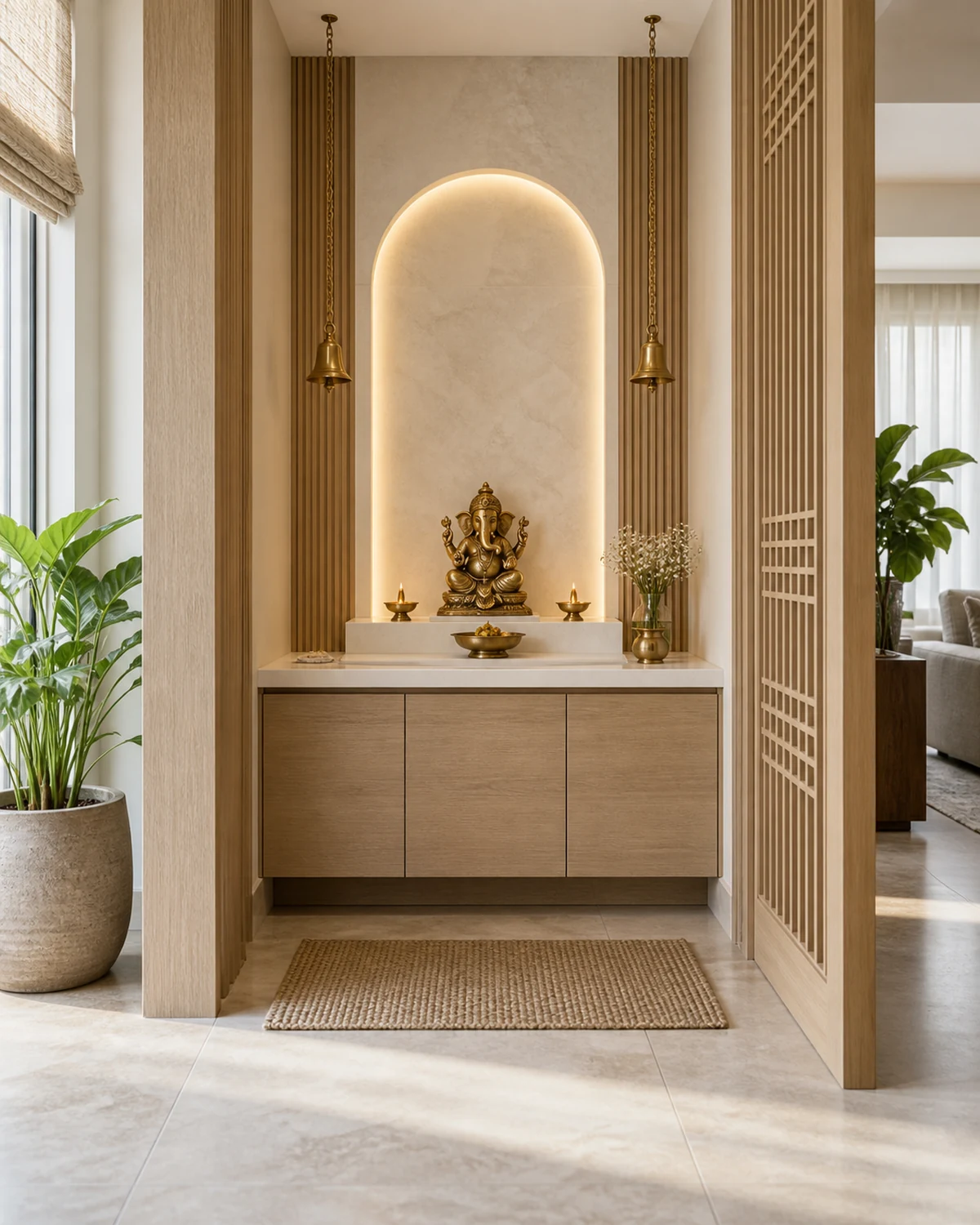
- Layout
- Foyer mandir shelf
- Body material
- Birch ply, open shelf
- Backdrop
- Pale birch batten
What changes: A pale birch shelf mounted in the foyer.
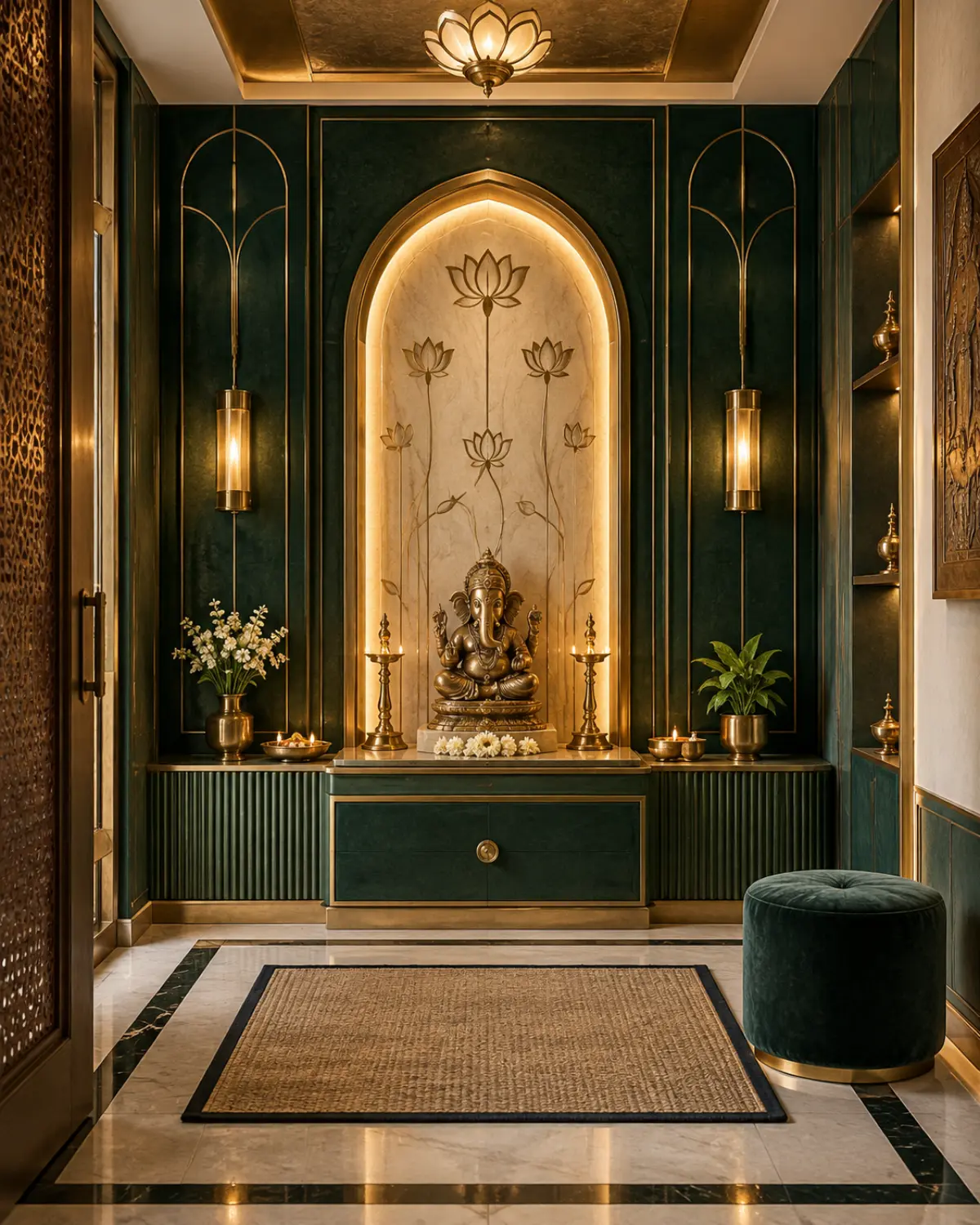
- Layout
- Jaali-screened alcove
- Body material
- Lacquer with brass jaali
- Backdrop
- Emerald lacquer with a brass sunburst
What changes: A brass jaali screen with a sunburst motif.
Foyer
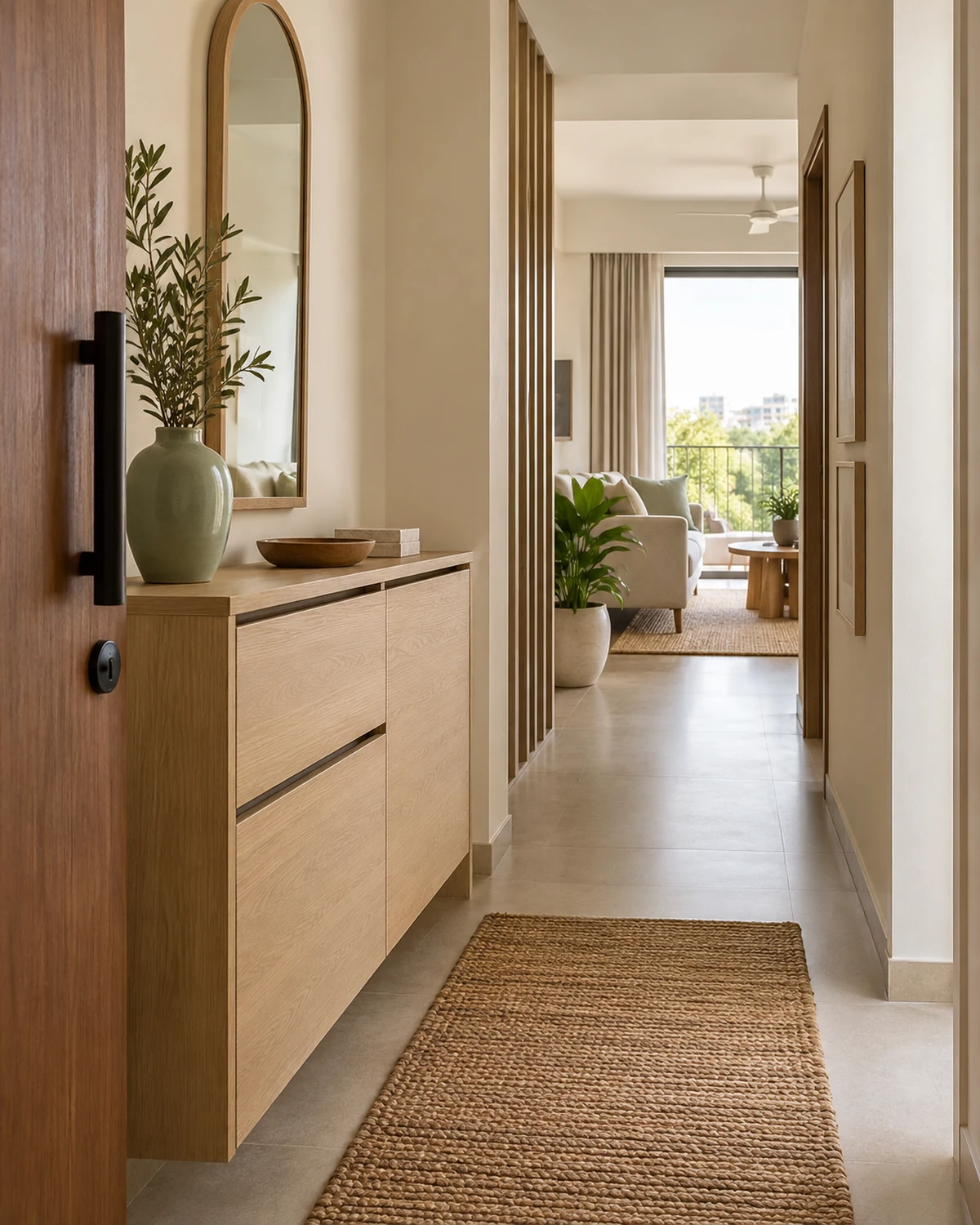
- Layout
- Bench with open shelving
- Feature
- Birch batten to dado height
- Console
- Birch bench with a shelf under
What changes: A bench inviting you to sit and take shoes off.
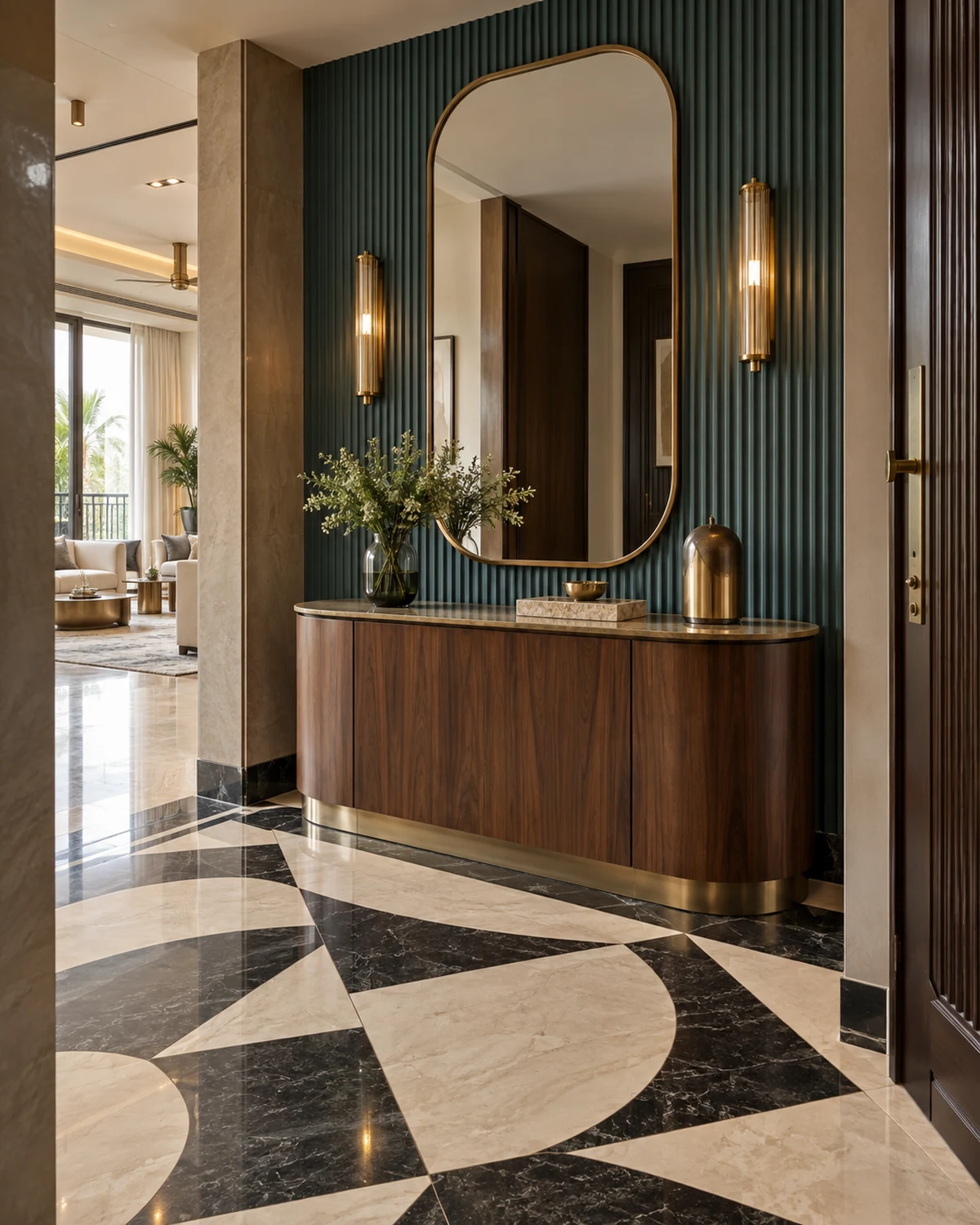
- Layout
- Mirror-and-brass statement
- Feature
- Antique-mirror with brass inlay
- Console
- Fluted lacquer console with brass
What changes: Antique-mirror panels with brass inlay.
False Ceiling

- Layout
- Linear profile, single plane
- Board
- Gypsum, flush single plane
- Drop
- 8″ flush drop
What changes: One flush plane with a recessed linear light.

- Layout
- Floating island with brass trim
- Board
- Gypsum with brass inlay trim
- Drop
- 12″ island over the seating
What changes: A floating island over the seating with a brass edge trim.
Balcony

- Layout
- Green corner with planters
- Floor
- Birch-tone composite deck
- Screen
- Rope-and-timber trellis
What changes: A herb rail and hanging planters.
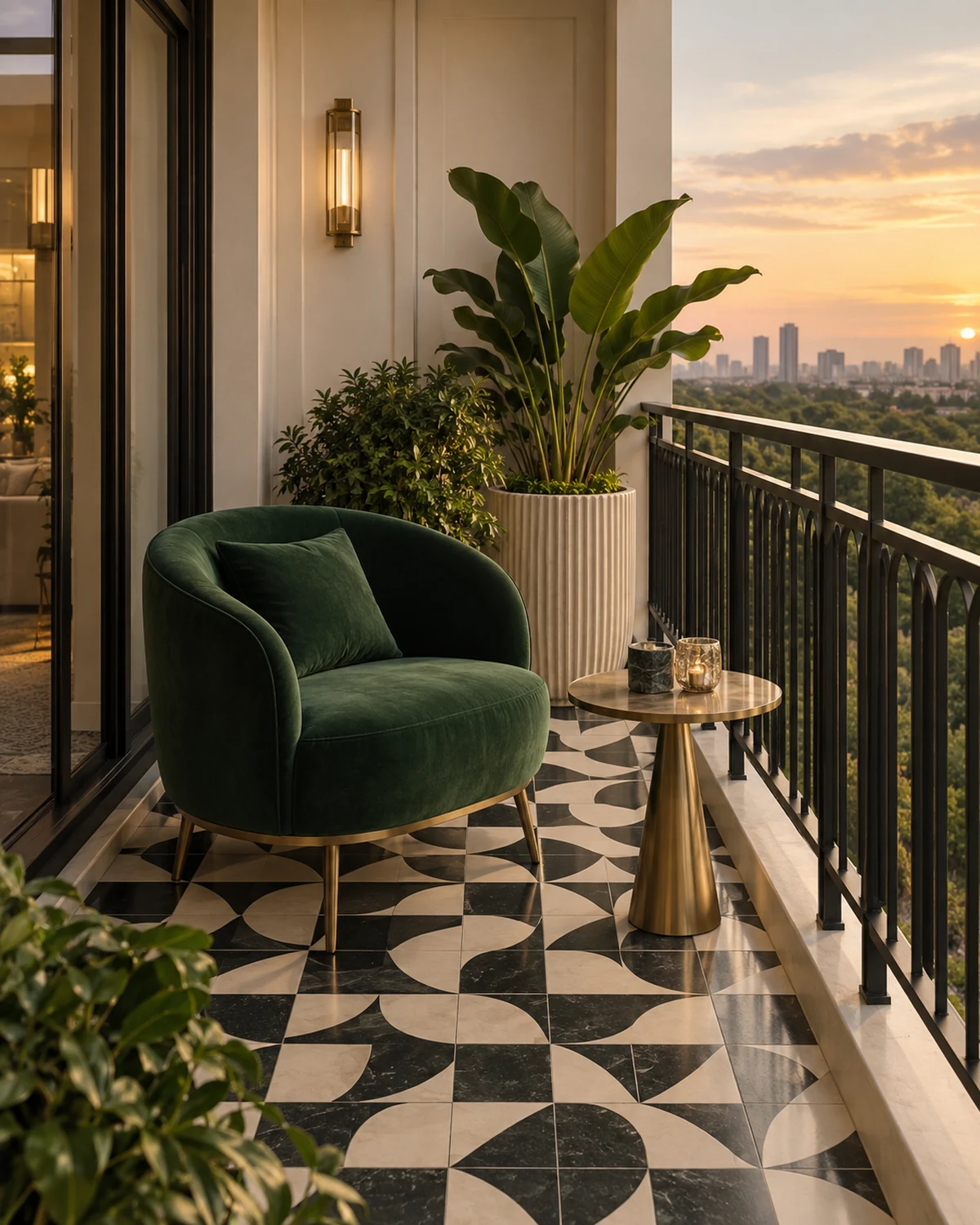
- Layout
- Lounge with a bar counter
- Floor
- Chequer tile in emerald and ivory
- Screen
- Brass-framed fluted glass
What changes: A bar counter in fluted lacquer with a brass top.
At a glance
Layouts compared
| Room | Indo-Scandinavian | Art Deco Glam |
|---|---|---|
| Modular Kitchen | Open L-Shaped | Straight-Line |
| Wardrobe | Loft-integrated sliding | Open dresser with fluting |
| Bathroom | Single vanity, walk-in shower | Powder room |
| Living Room | Compact with window seat | Lounge with bar |
| Pooja Room | Foyer mandir shelf | Jaali-screened alcove |
| Foyer | Bench with open shelving | Mirror-and-brass statement |
| False Ceiling | Linear profile, single plane | Floating island with brass trim |
| Balcony | Green corner with planters | Lounge with a bar counter |
Choosing between them
Scandi or Deco?
Both are coherent, considered palettes rather than opposites — the honest way to choose between Indo-Scandinavian and Art Deco Glam is against what is already fixed in the home (flooring, window frames, structural openings) rather than against a mood board. Indo-Scandinavian tends to suit a household that wants the room to feel settled from day one; Art Deco Glam tends to suit one that is comfortable with a stronger first impression and does not mind the maintenance that a bolder material palette usually asks for.
Neither style is a safer choice in any objective sense — Indo-Scandinavian carries less risk of looking dated quickly, while Art Deco Glam carries more character per square foot. What is safe depends entirely on what the household actually wants from the room.
Questions
Scandi vs Deco
Can a home mix Indo-Scandinavian and Art Deco Glam?
Within reason, room to room rather than within one sightline — a indo-scandinavian living room and a art deco glam study, for instance, read as a considered choice rather than an inconsistency, provided the transition happens at a doorway or a material change.
Which is easier to live with day to day?
Indo-Scandinavian generally asks less of daily upkeep; Art Deco Glam rewards more regular attention in exchange for a stronger character. Neither is objectively easier — it depends on how much time the household spends maintaining a finish versus how much impact it wants from it.
Which costs more to build, Indo-Scandinavian or Art Deco Glam?
Neither by default — cost follows finish grade and hardware rating, not the palette. A indo-scandinavian scheme in a premium finish and a art deco glam scheme in a mid-tier finish can land at very different totals despite the style comparison suggesting otherwise.
Which resells or ages better?
Both age well when specified properly; what differs is how visible ageing is. Indo-Scandinavian tends to show wear as a softening rather than a flaw; Art Deco Glam can look tired if a bold material is not maintained, but looks considered again the moment it is.
Room by room
Where Scandi or Deco tends to win
| Room | Which tends to work better |
|---|---|
| Modular Kitchen | Scandi reads better here for most households |
| Wardrobe | Scandi reads better here for most households |
| Bathroom | close call — depends on the room's existing daylight and dimensions |
| Living Room | close call — depends on the room's existing daylight and dimensions |
| Pooja Room | Scandi reads better here for most households |
| Foyer | close call — depends on the room's existing daylight and dimensions |
| False Ceiling | Scandi for daily use, Deco for occasional or formal use |
| Balcony | Deco reads better here for most households |
These are starting leans, not rules — the room’s own daylight, ceiling height and what is already fixed (flooring, existing joinery, a view worth keeping open) can flip any one of them. Treat the table as where to start looking rather than where to stop.
Materials and upkeep
What actually differs day to day
Where Indo-Scandinavian asks for consistency across a run — matched grain, a single sheen, an even colour — Art Deco Glam tolerates and often benefits from more variation piece to piece. That changes how forgiving each style is of a supply substitution mid-project.
Maintenance is the more honest way to decide than photographs. Indo-Scandinavian generally wears quietly and shows wear gradually; Art Deco Glam rewards more regular attention and shows neglect more visibly when it is not given that attention.
Lighting is worth deciding alongside the palette rather than after it. Indo-Scandinavian generally reads best under a warmer, more even light; Art Deco Glam often wants a layered scheme with a stronger accent to do justice to its bolder material moves.
Compare other styles
Other head-to-heads
Six-way comparisons
Next step
Torn between these two?
Bring the floor plan. We will draw your actual room in both and put them next to each other.