Compare
Pooja Room: six styles, side by side
The same pooja room brief resolved six ways. A pooja space needs orientation, ventilation and a place for everything the ritual requires. We resolve the direction and the smoke path first, then design the joinery around it.
Side by side
All six, in one row
Scroll sideways to compare, or filter down to the styles you are choosing between.
- Layout
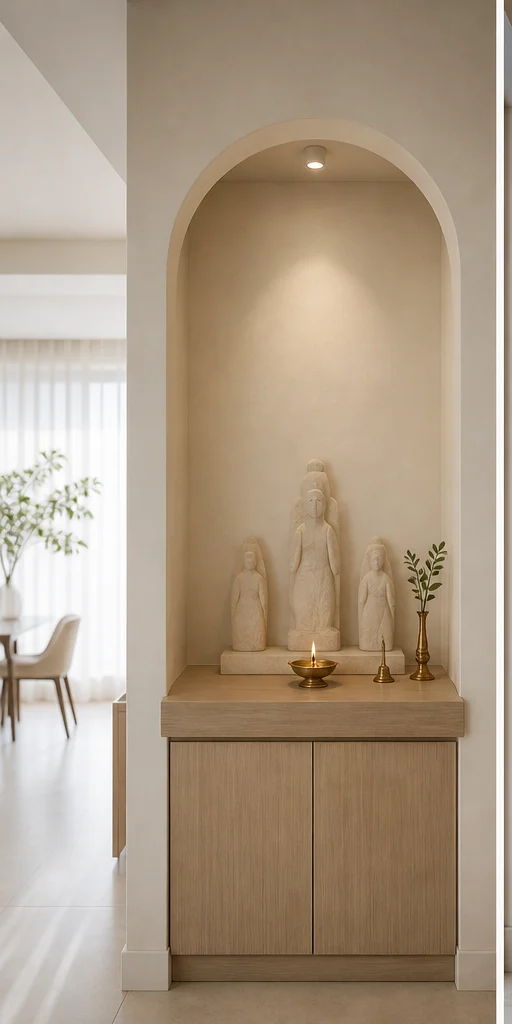
- Wall-mounted niche
- Body material
- Chalk-finished MDF, wall-hung
- Backdrop
- Plain chalk plaster
What changes: A simple recessed niche with a cove above it.
- Layout
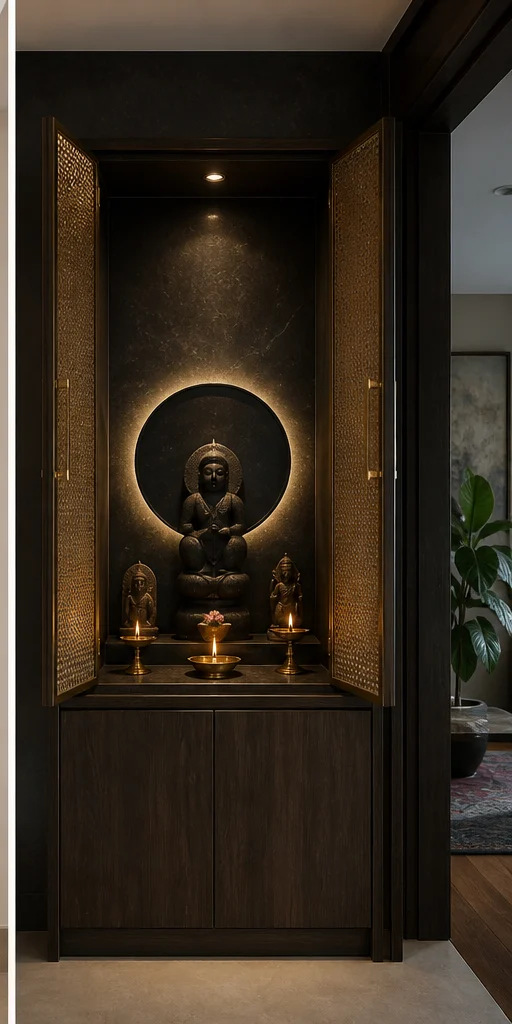
- Freestanding unit with doors
- Body material
- Dark ply with a lit reveal
- Backdrop
- Charcoal stone with a brass halo
What changes: A brass halo disc behind the idol, lit from the rim.
- Layout
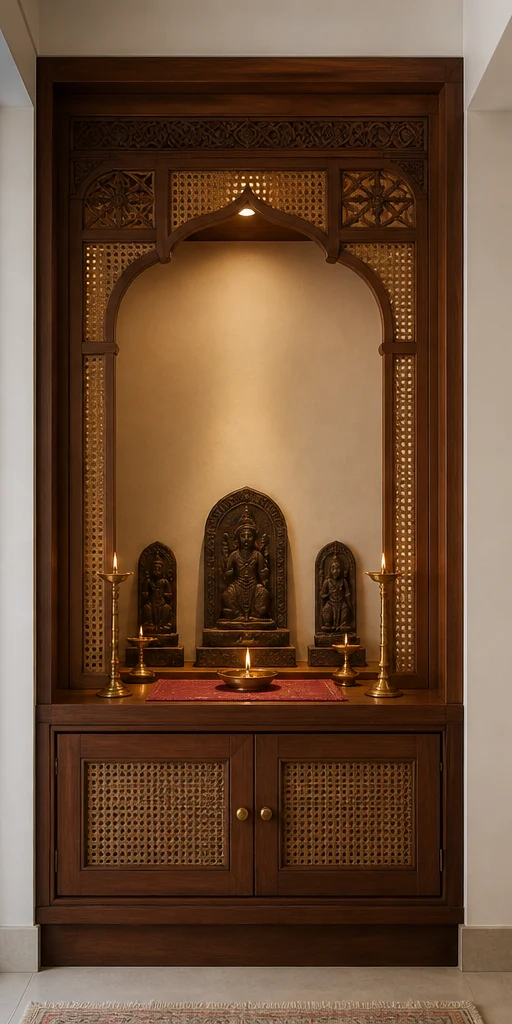
- Carved teak temple
- Body material
- Solid teak, hand-carved
- Backdrop
- Carved teak jaali
What changes: Hand-carved teak columns and a temple-form crown.

- Layout
- Wall-mounted with marble base
- Body material
- White marble with a moulded base
- Backdrop
- Book-matched marble with gold inlay
What changes: A marble base with gold-inlay detailing.
- Layout
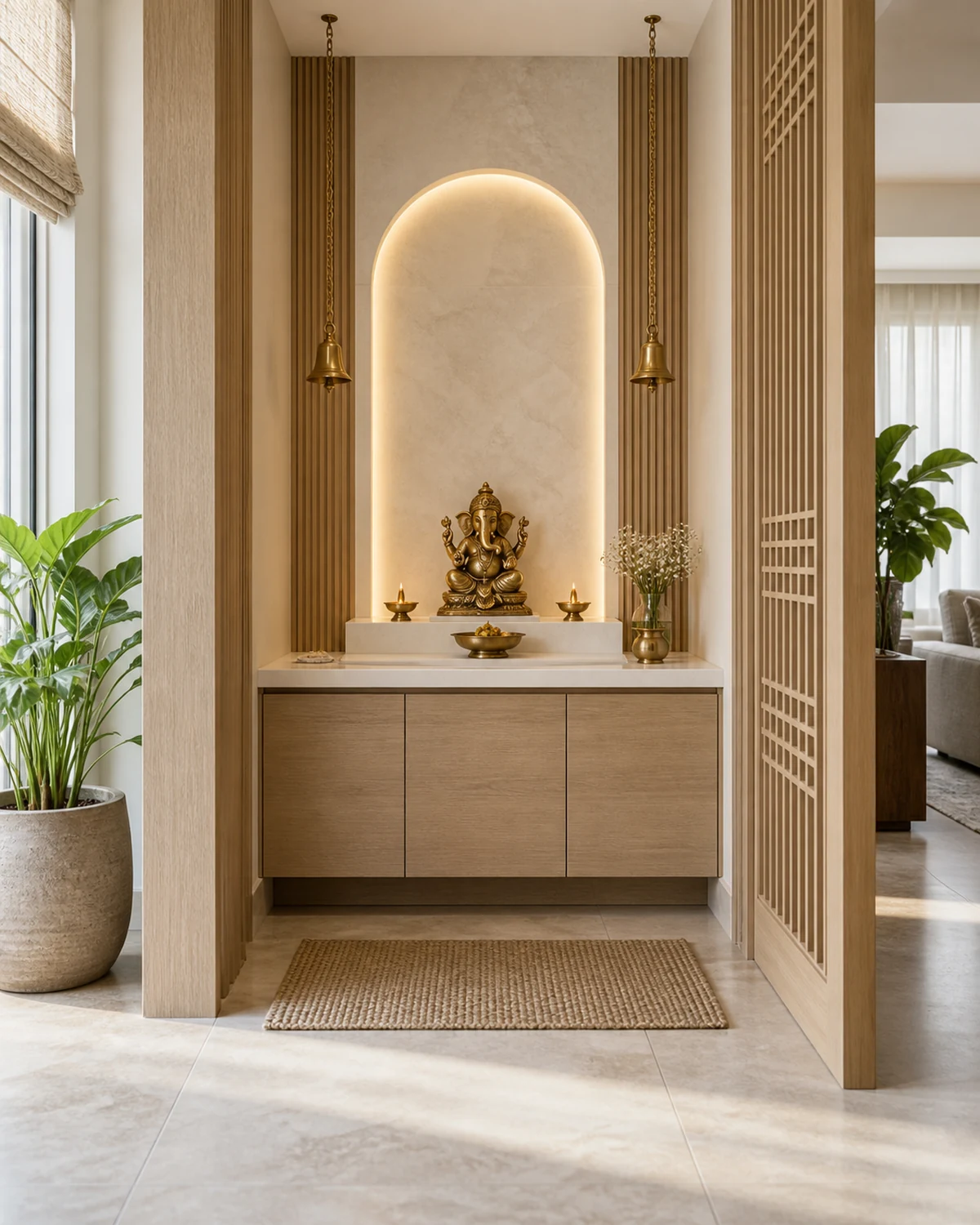
- Foyer mandir shelf
- Body material
- Birch ply, open shelf
- Backdrop
- Pale birch batten
What changes: A pale birch shelf mounted in the foyer.
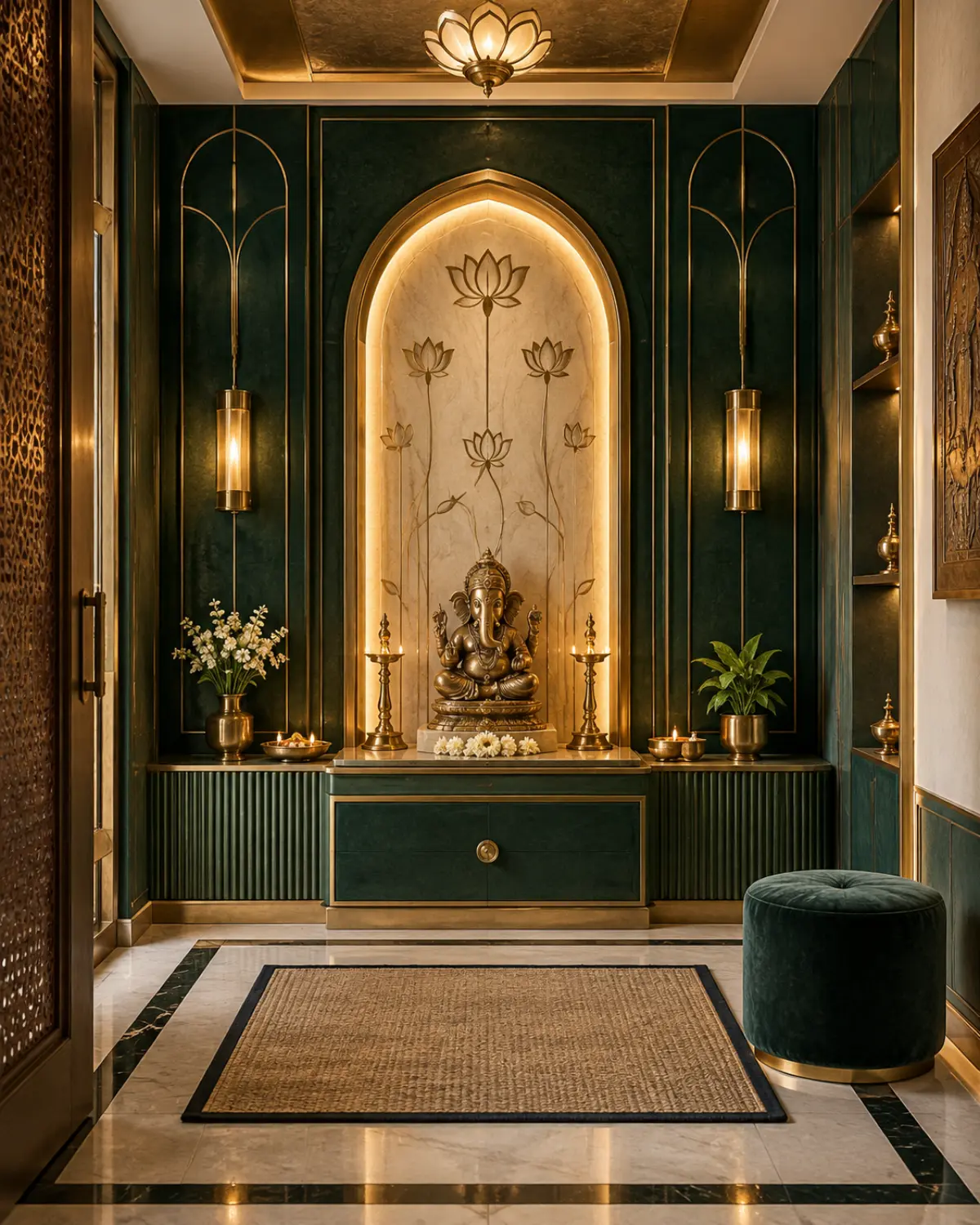
- Layout
- Jaali-screened alcove
- Body material
- Lacquer with brass jaali
- Backdrop
- Emerald lacquer with a brass sunburst
What changes: A brass jaali screen with a sunburst motif.
At a glance
The differences in one table
| Style | Layout | Body material | Ideal for |
|---|---|---|---|
| Serene Minimal | Wall-mounted niche | Chalk-finished MDF, wall-hung | Apartments with no dedicated room, where a wall niche must serve |
| Bold Contemporary | Freestanding unit with doors | Dark ply with a lit reveal | Homes that want the pooja space concealable when not in use |
| Modern Heritage | Carved teak temple | Solid teak, hand-carved | Households performing daily traditional rituals with full paraphernalia |
| Classic Luxe | Wall-mounted with marble base | White marble with a moulded base | Formal homes wanting the mandir as a designed centrepiece |
| Indo-Scandinavian | Foyer mandir shelf | Birch ply, open shelf | Compact flats where the mandir sits in the foyer or passage |
| Art Deco Glam | Jaali-screened alcove | Lacquer with brass jaali | Premium apartments wanting a contemporary reading of the mandir |
Sizing
Pooja Room dimensions by home size
| Home size | Typical room dimension | Layout that usually fits |
|---|---|---|
| 1 BHK | 2×3 feet niche | Wall-mounted niche |
| 2 BHK | 3×4 feet unit | Freestanding unit with doors |
| 3 BHK | 4×5 feet alcove | Carved teak temple |
| 4 BHK | 5×6 feet room | Wall-mounted with marble base |
| 4+ BHK / Villa | 6×8 feet dedicated room | Foyer mandir shelf |
How to choose
Picking between the six
The honest way to choose is to eliminate rather than select: rule out the styles that clash with what is already fixed in the home — the flooring, the window frames, an existing kitchen you are not replacing — and choose from what remains. Most people arrive certain about one style and leave having picked a different one once the elimination is done.
Layout tends to decide the choice before palette does. Two or three of the six styles above will suit your actual room dimensions and door positions; the rest will look right in the photograph and fight the room in practice. Start from the layout column in the table below, not the material column.
If two styles both work on paper, the deciding question is usually maintenance: how much upkeep the household will actually do. A high-gloss Bold scheme and a hand-oiled Heritage one both look considered on day one; only one of them stays that way without regular attention.
Keep one continuous flooring plane through connected spaces; changing floor material at a doorway makes both rooms feel smaller.
Shadow gaps at skirting and ceiling let a room read as planes rather than as boxes, and they hide the tolerances of an Indian building.
A room needs one generous gesture — a long sofa, a full-height joinery run, a single large artwork — and then quiet around it.
Plan for the fan. Ceiling fans are a fact of Indian life and a beautiful ceiling with an afterthought fan is a compromise seen every day.
Questions
Choosing a pooja room style
Which of these six suits a family with young children?
Serene Minimal and Indo-Scandinavian tend to wear best under daily family use — pale, matt surfaces show less than high gloss, and both specify durable, easily cleaned materials by default. Bold Contemporary and Art Deco Glam ask for more careful living.
Can pooja room mix two of these styles in one room?
Within reason. The six are coherent palettes rather than fixed rules, and most finished homes borrow across two. What rarely works is switching palette within one sightline in the same room.
Does the layout change between styles, or only the material?
Both. Each style resolves the pooja room brief with a different layout logic as well as a different material direction — see the layout column in the table above for exactly how.
Which style costs the least for a pooja room?
None of the six carries an inherent price premium over the others at the same specification tier — the cost difference between two pooja room projects usually comes from hardware grade and finish level, not from which of the six styles was chosen.
How do I see my own room in more than one of these styles?
Bring the floor plan to a consultation. We draw your actual room in the two or three styles you are choosing between rather than a generic version of each, which is usually what settles it.
Do the six styles take different lengths of time to build?
Not meaningfully — the production and installation programme for a pooja room runs on joinery quantity and finish complexity rather than on which palette is chosen. A heavily detailed scheme in any of the six styles adds time; a restrained one in any of the six saves it.
Can I see this comparison for a room size other than the default shown?
Yes — the pooja room category page carries the full sizing table across every home size, in all six styles, if you want the comparison scaled to your own room.
More questions
Pooja Room — the practical side
Living with pooja room, whichever style you choose
- Re-coat high-traffic paint every four to five years; corridors and entrance walls fail long before bedrooms.
- Service the joinery once a year — hinge adjustment, runner cleaning, silicone check.
- Rotate soft furnishings and rugs to even out sun exposure.
- Keep a project file with paint codes, laminate decors, hardware models and photographs of the services before they were covered.
How long does a pooja Room project take?
Four to six weeks on site for a single room within a larger fit-out, once design is signed off and materials are in. The design and approval stage before that is usually two to three weeks.
What should be decided first?
Use, circulation and storage. Everything visual follows those three; reversing the order is what produces beautiful rooms that do not work.
How is the budget usually split?
Joinery is normally the largest share, followed by finishes, then lighting and electrical, then furniture. Civil work is the item most often underestimated.
Can it be done in phases?
Yes, if the services and civil work are done in one go and the visible finishes are staged. Splitting the civil work across phases costs more than it saves.
Do I need to move out?
For a single room, no. For a full-home fit-out with civil work, most families move out for three to six weeks, and the schedule is written around that decision.
What is the warranty?
Lifetime on modular cabinetry, hardware and factory finishes in our standard scope, with the site work warranted separately. The handover file records what is covered.
More comparisons
Other rooms, side by side
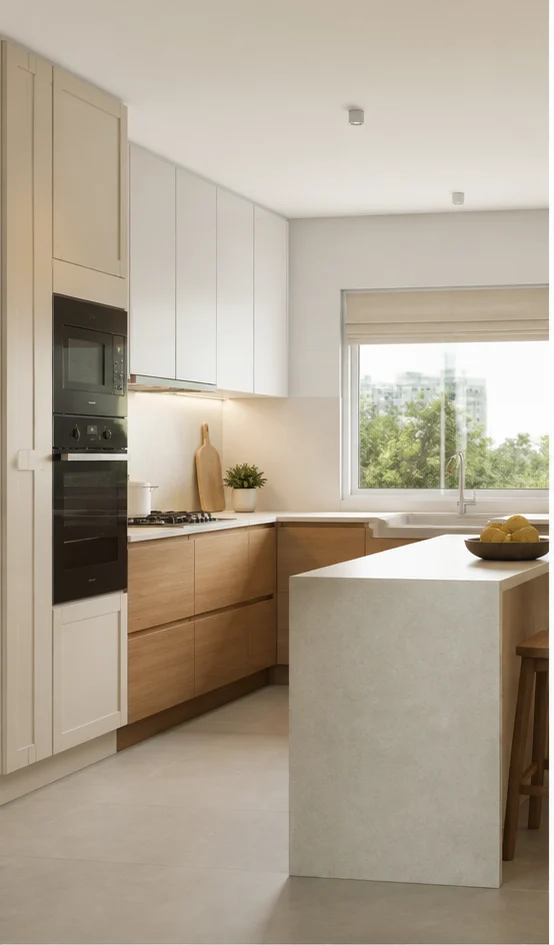
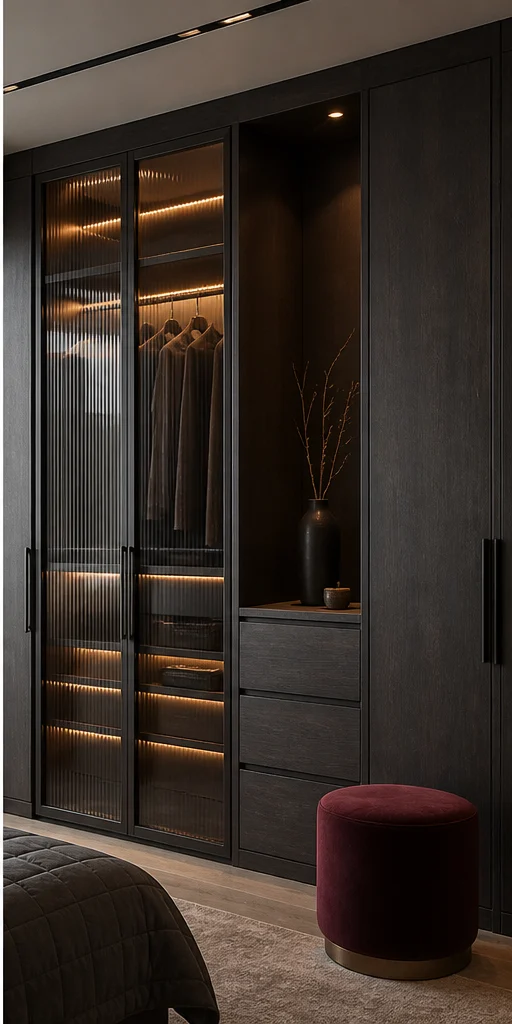
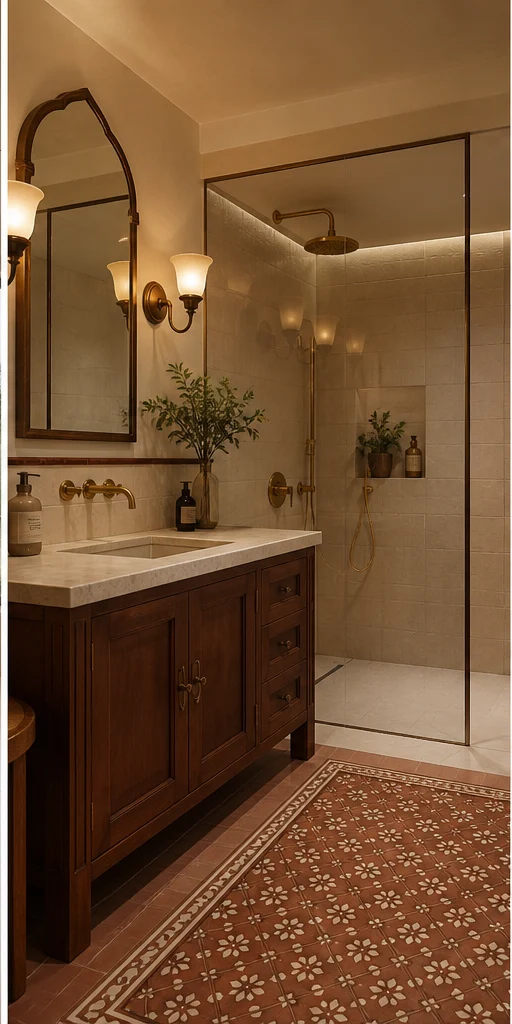
Next step
Choose your pooja room style with a designer.
Send the plan. We will draw your actual room in the two you are torn between and put them next to each other.