Magazine
Home Organisation
Storage that stays organised after the first month.

Articles
Home Organisation stories
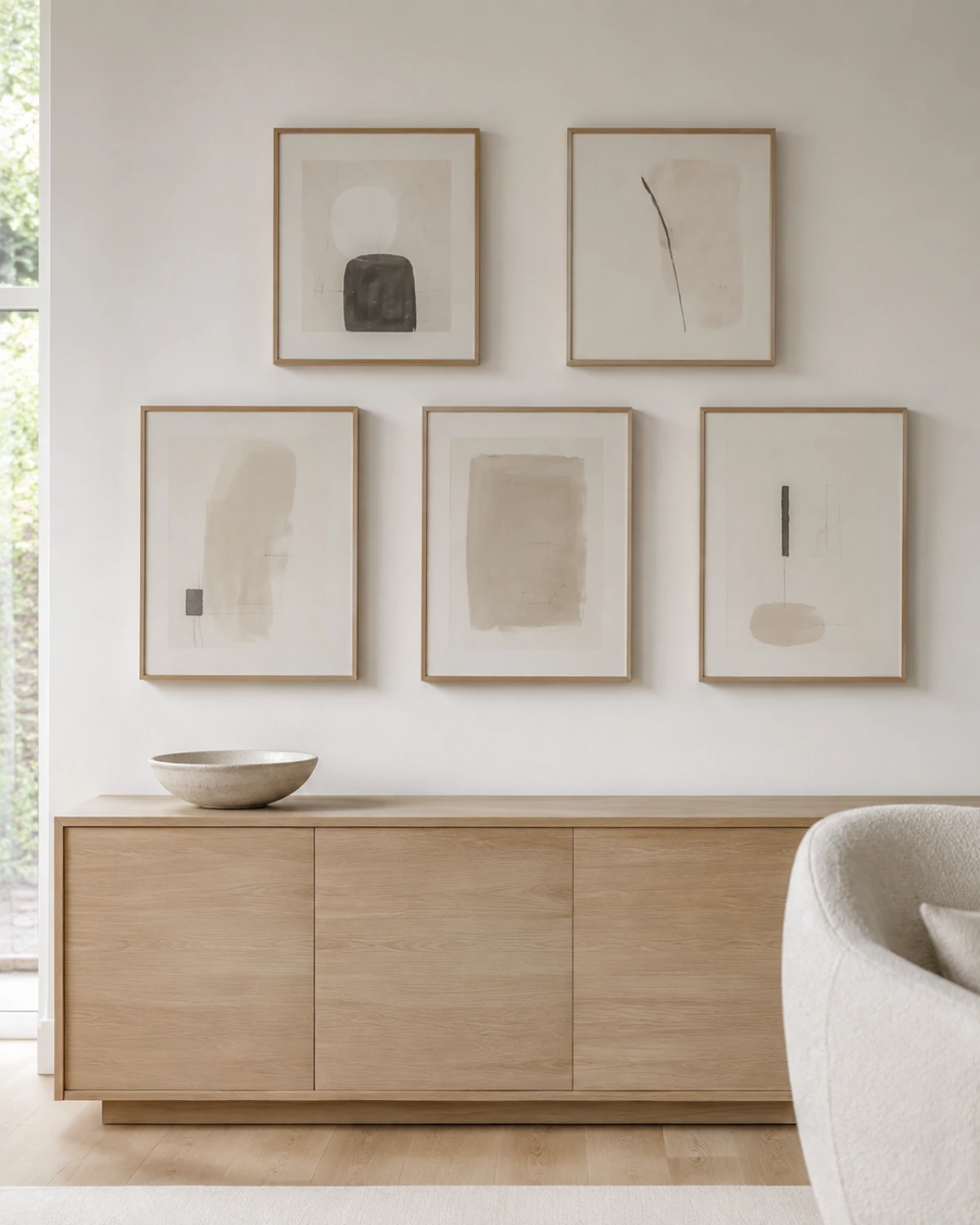
Organising a Wardrobe So It Stays Organised
Systems fail when they need more effort than the mess does.
Read
Zoning a Kitchen So You Stop Walking Across It
Five zones, each holding what that activity needs.
Read
An Entryway That Stays Tidy After Week Three
Every drop-zone system fails the same way. Design around that.
Read
Storing the Things You Only Need Twice a Year
Festival crockery, winter bedding, luggage — the volume nobody plans for.
ReadAbout this section
Reading Home Organisation well
Home Organisation sits alongside the design categories and the home-size pages on this site rather than apart from them — an idea that holds up here usually has a matching category page with the full specification, and a matching size page with the dimension it has to fit.
We keep this section separate from the design categories on purpose. The categories answer ‘what do we build’; home organisation answers ‘why’, which is a different question and deserves its own space rather than being folded into a specification table.
Most of what circulates as home organisation does not survive contact with an actual floor plan, an actual budget or an Indian monsoon. The articles here are written from projects we have built rather than from a mood board, which is why they read as specification as often as inspiration.
Where an idea depends on a ceiling height, a daylight direction or a room dimension you do not have, adapt the proportion rather than copying the detail directly. That adaptation is most of what a consultation actually does.
Each article below is built the same way: a small number of decisions, in the order we would actually raise them on site, with what each one depends on made explicit. None of them assume a particular budget tier — what changes with budget is the material specified, not which decisions get made first.
Home Organisation is one of the areas where the gap between a published image and a buildable plan is widest. The articles below try to close that gap by naming the decision behind each idea — what it costs, what it depends on, and what has to be true about your room before it applies.
Who it's for
Who home organisation is written for
This section is written for someone who already has a floor plan, or is about to get one, rather than someone still choosing whether to renovate. The articles assume a real room and a real budget, because that is where the decisions covered here actually get made.
Skim rather than read in order if you already know your problem. Each article stands alone and links back to the design categories and home-size pages that carry the fuller specification once an idea is worth pursuing.
There is no signup and no gate on any of this — every article is here to be used whether or not a project ever gets booked through us. If it saves you from one expensive mistake, it has done its job.
We would rather an article talked you out of something than let a mood board carry you into a room that will not work. That is the test each one is written against, more than whether it reads well.
Questions
Home Organisation — answered
Where should I start with home organisation?
With the floor plan and how the room is actually used — ideas are easy to collect and only become useful once they meet real dimensions and a real routine. Start with the first article below.
How much of this applies to a smaller home?
The proportion transfers; the count usually has to drop. One considered element in a small room reads better than several scaled-down ones, which is a recurring theme across this section.
Do these ideas suit Indian conditions specifically?
Where they do not, we say so directly. Humidity, dust, hard water and daily cooking defeat a fair amount of what circulates as inspiration, and the articles here are written around what actually holds up.
Can I get this applied to my own home?
Yes — bring the floor plan to a consultation and we will tell you which of these ideas suit your room, your budget and your building, and which do not.
Is this section relevant if I am working with my own contractor?
Yes — most of what is covered is a decision to raise with whoever is executing the work, not something that requires us specifically. Where it does matter who specifies it, the article says so.
How often is this section updated?
When a project teaches us something that changes the advice, not on a fixed schedule. An article reflects what we would tell a client today, which is also why some are more recent than others.
Do the articles assume a particular budget?
No — the decisions covered apply at every budget tier; only the specific material or product named as an example would change. Read for the decision, substitute your own material grade.
How does this section relate to the design categories elsewhere on the site?
This section covers the thinking; the design categories carry the buildable specification — layout, material, sizing and cost — for the room itself. Most articles link directly into the relevant category once an idea is worth pursuing.
Are these articles specific to one city, or general across India?
General across India, with city-specific adjustments — humidity, water hardness, dust and seasonal temperature swings — called out where they change the advice. The city pages elsewhere on this site carry the local specification in full.
Can I ask about something from this section during a consultation?
Yes — that is what a consultation is for. Bring the specific question and the floor plan, and we will give you the answer for your room rather than the general one written here.
How is the budget usually split?
Joinery is normally the largest share, followed by finishes, then lighting and electrical, then furniture. Civil work is the item most often underestimated.
Can it be done in phases?
Yes, if the services and civil work are done in one go and the visible finishes are staged. Splitting the civil work across phases costs more than it saves.
Do I need to move out?
For a single room, no. For a full-home fit-out with civil work, most families move out for three to six weeks, and the schedule is written around that decision.
Where this connects
Design categories home organisation touches most
Foyer
Decide the storage requirement in litres, not in cabinets. Households consistently underestimate this and then add furniture that ruins the plan.
Shadow gaps at skirting and ceiling let a room read as planes rather than as boxes, and they hide the tolerances of an Indian building.
Balcony
Specify UV and salt resistance honestly. Powder-coated aluminium and solution-dyed acrylic survive; painted steel and standard fabric do not.
Keep the finished outdoor level below the internal floor level with a clear threshold detail, so wind-driven rain cannot cross.
Modular Kitchen
Count the drawers, not the cabinets. Drawers are what make a deep cabinet usable, and they are the honest difference between two quotes.
A drip groove machined into the underside of the counter edge keeps water off the shutter faces at the sink.
Wardrobe
Insist on soft-close on every drawer and door. It is the difference between joinery that stays aligned and joinery that loosens.
Sensor lighting on the hanging rail is the single upgrade people notice daily.
Further reading
More of the magazine
Nothing in home organisation exists in isolation from the rest of the magazine — decisions about materials connect to decisions about budget, which connect to decisions about process. Reading across sections rather than staying in one usually produces a better brief than reading deeply in only one.
Keep reading
More sections
Also in the magazine
Home sizes
Next step
Planning a project?
Reading is a good start. A floor plan and a conversation gets you a lot further.