Compare
Crockery Unit: six styles, side by side
The same crockery unit brief resolved six ways. A crockery unit is a display problem and a storage problem at once. What goes behind glass has to earn it; everything else gets a door.
 Photo: ghahnroyal · BY 2.0
Side by side
All six, in one row
Scroll sideways to compare, or filter down to the styles you are choosing between.
 Photo: ghahnroyal · BY 2.0
- Layout
- Wall-hung glass display
- Body
- Chalk laminate, wall-hung
- Doors
- Frameless clear glass
What changes: Frameless glass so only the contents read.
Photo: ghahnroyal · BY 2.0- Layout
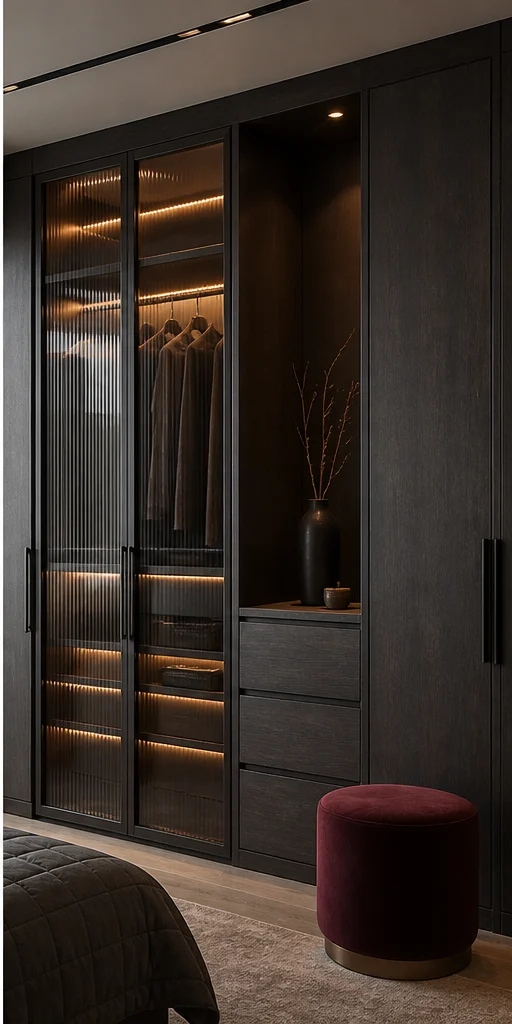
- Dark full-height with lit bays
- Body
- Charcoal veneer, full height
- Doors
- Bronze-tinted glass in a black frame
What changes: Bronze-tinted glass in a slim black frame.
 Photo: ghahnroyal · BY 2.0
- Layout
- Teak with cane and glass
- Body
- Solid teak frame
- Doors
- Cane below, clear glass above
What changes: Cane below and clear glass above.
 Photo: ghahnroyal · BY 2.0
- Layout
- Glazed classic with a gilt bead
- Body
- Ivory PU with mouldings
- Doors
- Glazed with a gilt astragal
What changes: A gilt astragal dividing the glazing.
 Photo: ghahnroyal · BY 2.0
- Layout
- Birch open shelving
- Body
- Birch ply, open
- Doors
- None — open shelving
What changes: Fully open birch shelving.
 Photo: insidious_plots · BY 2.0
- Layout
- Fluted with mirror-backed bays
- Body
- Emerald lacquer with brass
- Doors
- Fluted glass in a brass frame
What changes: Fluted glass in brass frames.
At a glance
The differences in one table
| Style | Layout | Body | Ideal for |
|---|---|---|---|
| Serene Minimal | Wall-hung glass display | Chalk laminate, wall-hung | Compact dining areas needing display without bulk |
| Bold Contemporary | Dark full-height with lit bays | Charcoal veneer, full height | Larger dining rooms wanting a full-height storage wall |
| Modern Heritage | Teak with cane and glass | Solid teak frame | Homes with brass and traditional serveware to show |
| Classic Luxe | Glazed classic with a gilt bead | Ivory PU with mouldings | Formal dining rooms with a dinner service |
| Indo-Scandinavian | Birch open shelving | Birch ply, open | Family kitchens wanting everything within reach |
| Art Deco Glam | Fluted with mirror-backed bays | Emerald lacquer with brass | Dining rooms doubling as an entertaining space |
Sizing
Crockery Unit dimensions by home size
| Home size | Typical room dimension | Layout that usually fits |
|---|---|---|
| 1 BHK | 3×6 feet wall-hung | Wall-hung glass display |
| 2 BHK | 4×7 feet | Dark full-height with lit bays |
| 3 BHK | 6×8 feet | Teak with cane and glass |
| 4 BHK | 8×9 feet full height | Glazed classic with a gilt bead |
| 4+ BHK / Villa | 10×9 feet with a bar | Birch open shelving |
How to choose
Picking between the six
The honest way to choose is to eliminate rather than select: rule out the styles that clash with what is already fixed in the home — the flooring, the window frames, an existing kitchen you are not replacing — and choose from what remains. Most people arrive certain about one style and leave having picked a different one once the elimination is done.
Layout tends to decide the choice before palette does. Two or three of the six styles above will suit your actual room dimensions and door positions; the rest will look right in the photograph and fight the room in practice. Start from the layout column in the table below, not the material column.
If two styles both work on paper, the deciding question is usually maintenance: how much upkeep the household will actually do. A high-gloss Bold scheme and a hand-oiled Heritage one both look considered on day one; only one of them stays that way without regular attention.
Specify the arm width honestly: a 200mm arm on a three-seater removes a whole seat of usable width.
Leave 750mm of circulation behind a dining chair pulled out, and 400mm between a sofa and a coffee table. Rooms fail on these two numbers more than on style.
Questions
Choosing a crockery unit style
Which of these six suits a family with young children?
Serene Minimal and Indo-Scandinavian tend to wear best under daily family use — pale, matt surfaces show less than high gloss, and both specify durable, easily cleaned materials by default. Bold Contemporary and Art Deco Glam ask for more careful living.
Can crockery unit mix two of these styles in one room?
Within reason. The six are coherent palettes rather than fixed rules, and most finished homes borrow across two. What rarely works is switching palette within one sightline in the same room.
Does the layout change between styles, or only the material?
Both. Each style resolves the crockery unit brief with a different layout logic as well as a different material direction — see the layout column in the table above for exactly how.
Which style costs the least for a crockery unit?
None of the six carries an inherent price premium over the others at the same specification tier — the cost difference between two crockery unit projects usually comes from hardware grade and finish level, not from which of the six styles was chosen.
How do I see my own room in more than one of these styles?
Bring the floor plan to a consultation. We draw your actual room in the two or three styles you are choosing between rather than a generic version of each, which is usually what settles it.
Next step
Choose your crockery unit style with a designer.
Send the plan. We will draw your actual room in the two you are torn between and put them next to each other.