Compare
Wall Paint: six styles, side by side
The same wall paint brief resolved six ways. Paint is the cheapest lever in the house and the one most often pulled badly. We choose the sheen and the undertone for the light the room actually gets.

Side by side
All six, in one row
Scroll sideways to compare, or filter down to the styles you are choosing between.

- Layout
- Single chalk tone throughout
- Colour
- Chalk white, warm undertone
- Sheen
- Matt, 2% sheen
What changes: One colour on walls, ceiling and trim so the room reads as a volume.
- Layout
- Charcoal feature wall
- Colour
- Charcoal with an oxblood alcove
- Sheen
- Matt walls, eggshell joinery
What changes: Colour-drenching a single alcove or wall to create depth.

- Layout
- Lime-wash in warm ochre
- Colour
- Warm ochre lime-wash
- Sheen
- Lime-wash, natural chalk finish
What changes: Hand-applied lime-wash with visible brush movement.
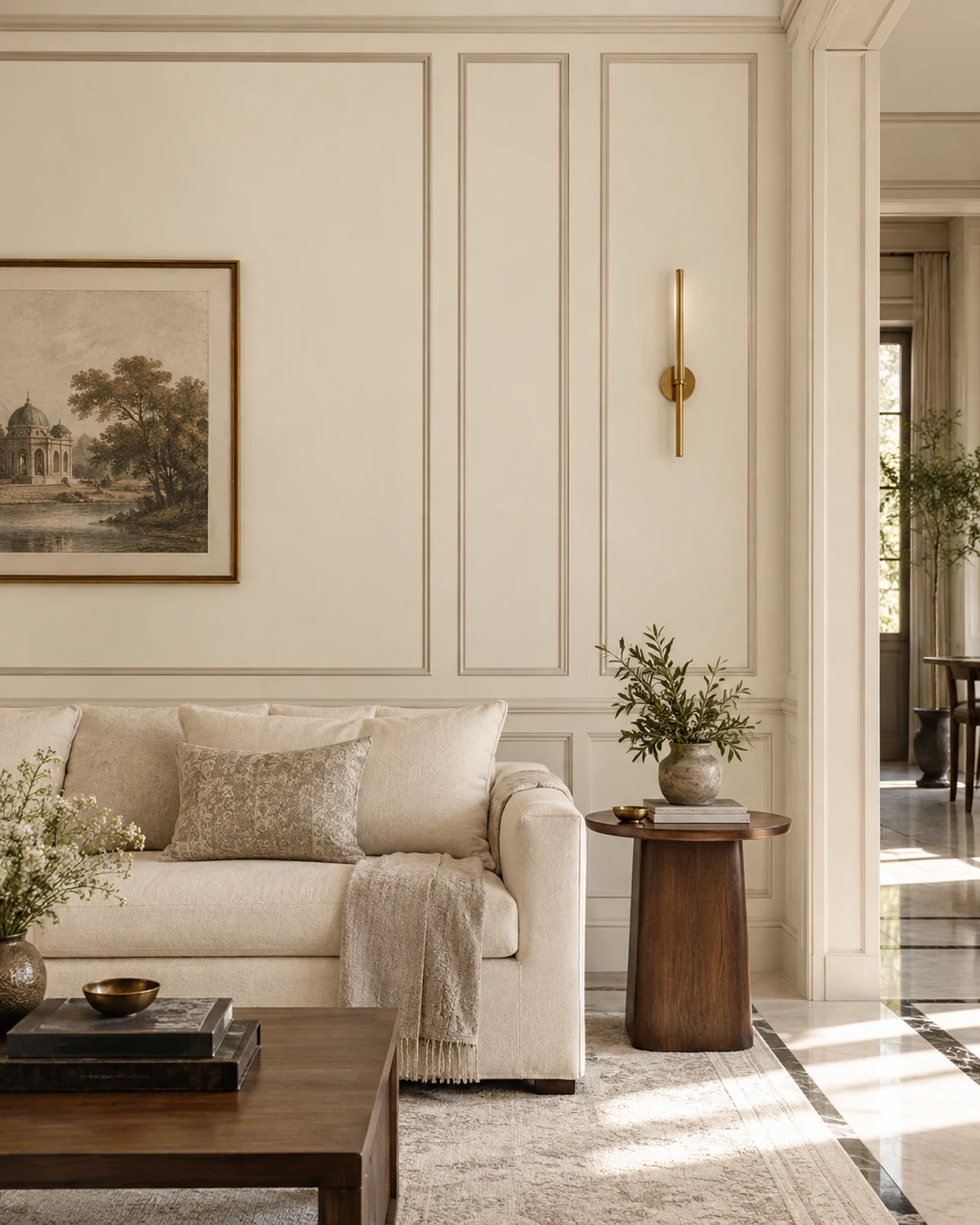
- Layout
- Ivory with a picture rail
- Colour
- Ivory with a gilt-picked bead
- Sheen
- Eggshell with a satin bead
What changes: Panel mouldings picked out in a second sheen.
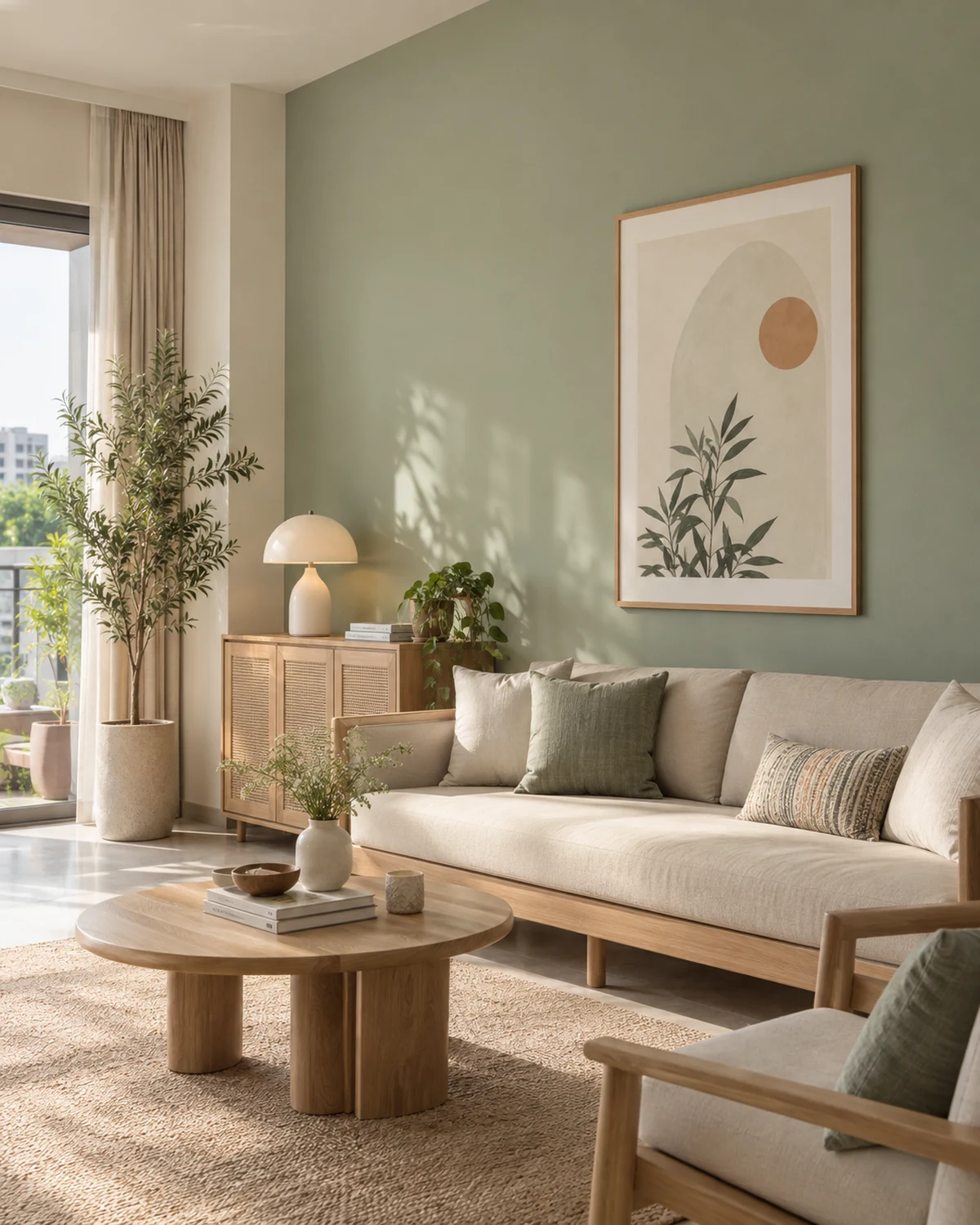
- Layout
- Sage half-wall with birch
- Colour
- Soft sage below, chalk above
- Sheen
- Matt with a satin dado rail
What changes: A two-tone wall split at dado height.

- Layout
- Emerald lacquered panel
- Colour
- Deep emerald, high sheen
- Sheen
- High-gloss lacquer
What changes: Sprayed high-gloss lacquer, mirror-flat.
At a glance
The differences in one table
| Style | Layout | Colour | Ideal for |
|---|---|---|---|
| Serene Minimal | Single chalk tone throughout | Chalk white, warm undertone | Homes wanting calm, uninterrupted wall planes |
| Bold Contemporary | Charcoal feature wall | Charcoal with an oxblood alcove | Rooms that need depth and drama without joinery |
| Modern Heritage | Lime-wash in warm ochre | Warm ochre lime-wash | Homes wanting a natural, breathable, hand-made finish |
| Classic Luxe | Ivory with a picture rail | Ivory with a gilt-picked bead | Formal rooms with panelling and cornice |
| Indo-Scandinavian | Sage half-wall with birch | Soft sage below, chalk above | Family homes needing durability at child height |
| Art Deco Glam | Emerald lacquered panel | Deep emerald, high sheen | Statement walls in dining rooms, bars and powder rooms |
Sizing
Wall Paint dimensions by home size
| Home size | Typical room dimension | Layout that usually fits |
|---|---|---|
| 1 BHK | One tone, whole flat | Single chalk tone throughout |
| 2 BHK | One accent per room | Charcoal feature wall |
| 3 BHK | Lime-wash in living areas | Lime-wash in warm ochre |
| 4 BHK | Panelling in formal rooms | Ivory with a picture rail |
| 4+ BHK / Villa | Full bespoke scheme | Sage half-wall with birch |
How to choose
Picking between the six
The honest way to choose is to eliminate rather than select: rule out the styles that clash with what is already fixed in the home — the flooring, the window frames, an existing kitchen you are not replacing — and choose from what remains. Most people arrive certain about one style and leave having picked a different one once the elimination is done.
Layout tends to decide the choice before palette does. Two or three of the six styles above will suit your actual room dimensions and door positions; the rest will look right in the photograph and fight the room in practice. Start from the layout column in the table below, not the material column.
If two styles both work on paper, the deciding question is usually maintenance: how much upkeep the household will actually do. A high-gloss Bold scheme and a hand-oiled Heritage one both look considered on day one; only one of them stays that way without regular attention.
Start the first drop on a plumb line, not on the corner. No corner in an Indian building is plumb, and the error compounds across the wall.
Plan where the pattern is cut by the ceiling. A motif sliced in half at the cornice is the detail people notice from the sofa.
Behind a bed, centre the pattern on the bed rather than the wall; the bed is what the eye reads it against.
Where a wall finish meets a switch plate, the plate should sit on the finish, not be papered around after fixing.
Questions
Choosing a wall paint style
Which of these six suits a family with young children?
Serene Minimal and Indo-Scandinavian tend to wear best under daily family use — pale, matt surfaces show less than high gloss, and both specify durable, easily cleaned materials by default. Bold Contemporary and Art Deco Glam ask for more careful living.
Can wall paint mix two of these styles in one room?
Within reason. The six are coherent palettes rather than fixed rules, and most finished homes borrow across two. What rarely works is switching palette within one sightline in the same room.
Does the layout change between styles, or only the material?
Both. Each style resolves the wall paint brief with a different layout logic as well as a different material direction — see the layout column in the table above for exactly how.
Which style costs the least for a wall paint?
None of the six carries an inherent price premium over the others at the same specification tier — the cost difference between two wall paint projects usually comes from hardware grade and finish level, not from which of the six styles was chosen.
How do I see my own room in more than one of these styles?
Bring the floor plan to a consultation. We draw your actual room in the two or three styles you are choosing between rather than a generic version of each, which is usually what settles it.
Do the six styles take different lengths of time to build?
Not meaningfully — the production and installation programme for a wall paint runs on joinery quantity and finish complexity rather than on which palette is chosen. A heavily detailed scheme in any of the six styles adds time; a restrained one in any of the six saves it.
Can I see this comparison for a room size other than the default shown?
Yes — the wall paint category page carries the full sizing table across every home size, in all six styles, if you want the comparison scaled to your own room.
More questions
Wall Paint — the practical side
Living with wall paint, whichever style you choose
- Dust with a dry microfibre on a soft broom head every few months, top to bottom.
- Spot-clean marks immediately with a barely damp cloth; rubbing hard burnishes the surface and leaves a shiny patch.
- Keep furniture a few millimetres off the wall — chair backs against a papered wall wear a line at exactly seat height.
- Fix damp at source before repairing any finish. Reapplying over a damp wall wastes the material twice.
How long does Wall Paint last?
Eight to twelve years in a bedroom or living room in normal use. Life is shortened most by damp behind the wall and by sunlight on unprotected pigment.
Can it be applied over an existing finish?
Only if the existing surface is sound, dry and non-glossy. Anything flaking, chalky or damp must be taken back and made good first.
Is it suitable for a bathroom or kitchen?
In the dry zone, with a washable grade and good ventilation. Behind a hob or inside a shower, use tile, glass or stone instead.
How much wall preparation is needed?
Two coats of putty, sanded, and a sealing primer on a normal wall — more if the wall is old or has been patched. Preparation is where the finished quality is decided.
Can one wall be done rather than the whole room?
Yes, and it is usually the better decision. Choose the wall the room is oriented around, and keep the remaining three quiet.
How is it removed later?
A primed wall releases cleanly with steam or a stripping solution. An unprimed wall takes the plaster skim with it, which is the argument for not skipping the primer.
More comparisons
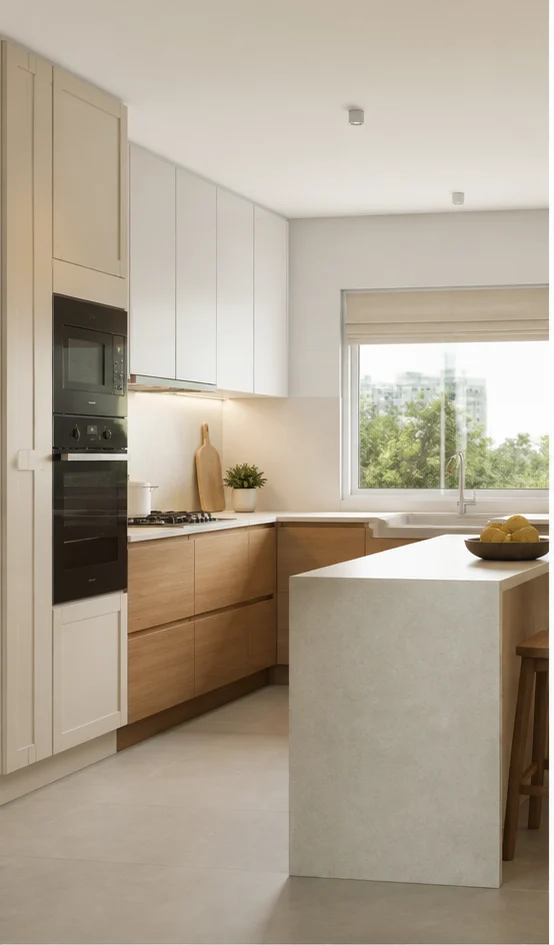
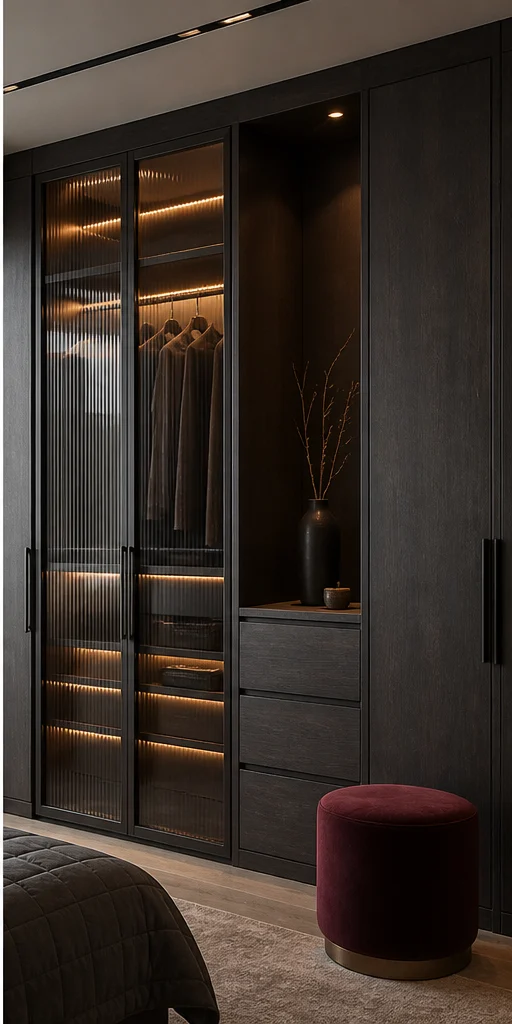
Other rooms, side by side
Next step
Choose your wall paint style with a designer.
Send the plan. We will draw your actual room in the two you are torn between and put them next to each other.