Pooja Room · Modern Heritage
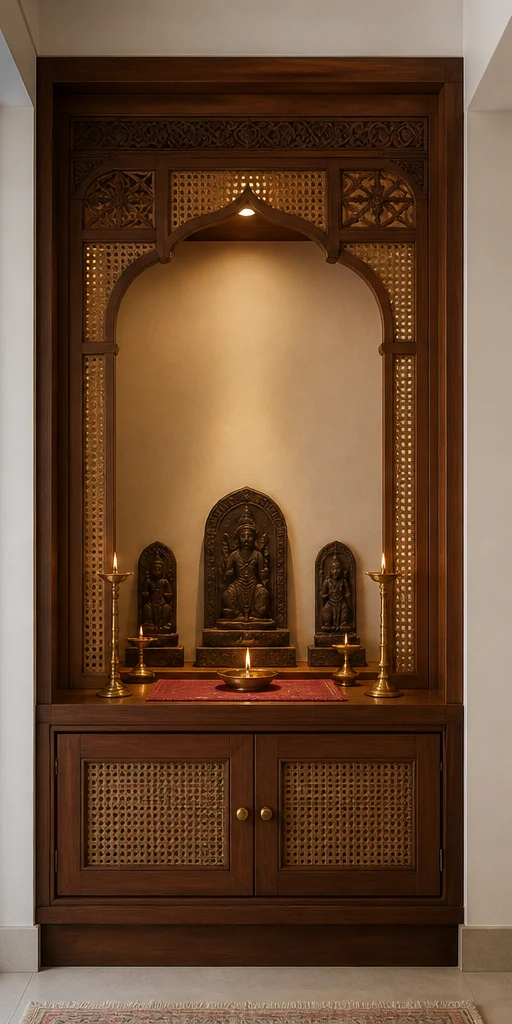
Teak Heritage Carved teak temple Pooja Room Design
Indian craft detailing on a contemporary frame — jaali, cane, inlay and hand-finished brass, used sparingly. A pooja space needs orientation, ventilation and a place for everything the ritual requires. We resolve the direction and the smoke path first, then design the joinery around it.
Specification
Pooja Room design details
| Detail | Specification |
|---|---|
| Layout | Carved teak temple |
| Style | Modern Heritage |
| Palette | Teak · Cane · Antique Brass |
| Body material | Solid teak, hand-carved |
| Backdrop | Carved teak jaali |
| Doors | Hinged teak with brass bells |
| Lighting | Brass diyas with warm uplight |
| Home size | Room dimension |
|---|---|
| 1 BHK | 2×3 feet niche |
| 2 BHK | 3×4 feet unit |
| 3 BHK | 4×5 feet alcove |
| 4 BHK | 5×6 feet room |
| 4+ BHK / Villa | 6×8 feet dedicated room |
Storage features
- Carved drawer front for pooja items
- A dedicated shelf for the samai
- Storage for books and scriptures
Special features
- Hand-carved teak columns and a temple-form crown
- A jaali back panel that lets incense smoke pass
- Brass bells hung on the door frame
Ideal forHouseholds performing daily traditional rituals with full paraphernalia
Compare
The same pooja room in the other five styles
One brief, six resolutions. Each carries its own layout, material specification and storage strategy.
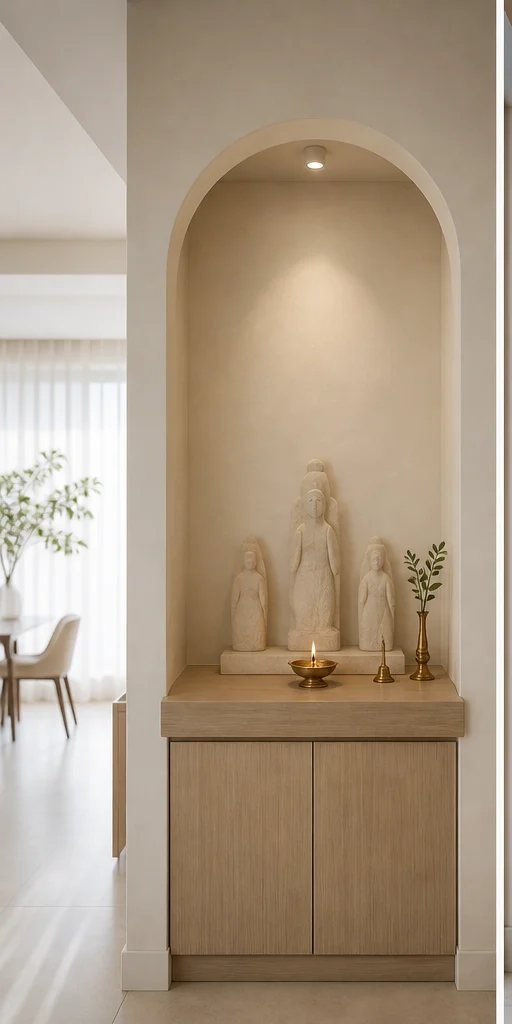
Minimal Wall-mounted niche Pooja Room
Chalk · Pale Oak · Linen
See this design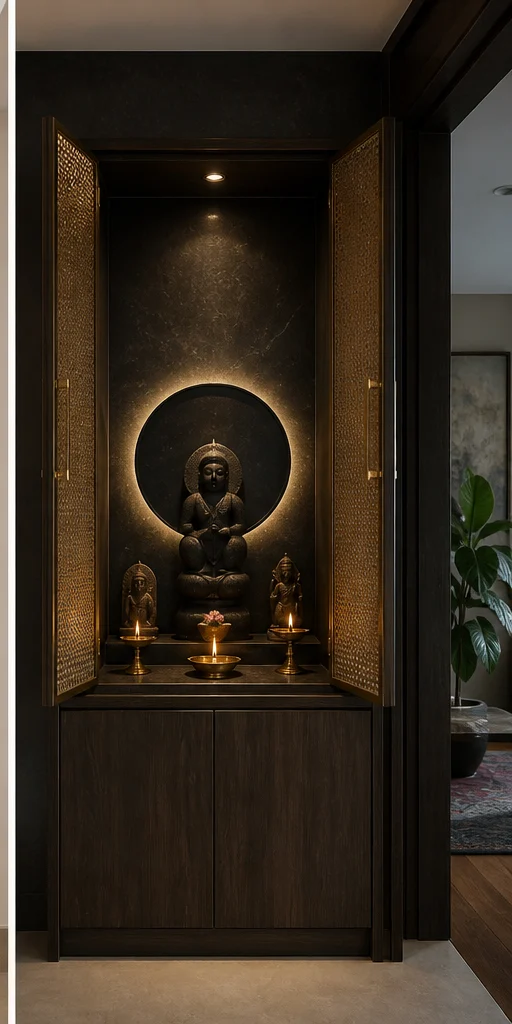
Bold Freestanding unit with doors Pooja Room
Charcoal · Oxblood · Smoked Oak
See this designClassic Wall-mounted with marble base Pooja Room
Ivory · Statuario · Gold
See this designScandi Foyer mandir shelf Pooja Room
Birch · Chalk · Sage
See this designDeco Jaali-screened alcove Pooja Room
Emerald · Brass · Lacquer
See this designQuestions
Pooja Room questions
Which direction should a pooja room face?
The north-east quadrant is traditionally preferred, with the person praying facing east or north. Where the plan does not allow it, the north-east corner of any room is the usual compromise.
Should the pooja unit have doors?
It depends on use. Daily worship favours an open niche; homes that light camphor and want the space closed between rituals are better served by shutters, ideally ventilated.
How do I deal with smoke and soot?
Ventilate above the unit — a jaali back panel, a grille, or proximity to a window. Avoid laminate directly above the lamp; stone, marble or solid timber handles heat and soot far better.
Can a pooja unit go in the kitchen?
It is common in compact flats but traditionally avoided, particularly beside the sink or the hob. If there is no alternative, place it on the north-east wall away from the wet zone.
What material lasts best for a mandir?
Solid teak or marble. Both take heat, oil and soot without delaminating, and both age into the space rather than looking worn.
Next step
Build this pooja room.
Send the floor plan and the room dimensions. We come back with this design adapted to your space and priced line by line.