Crockery Unit · Art Deco Glam
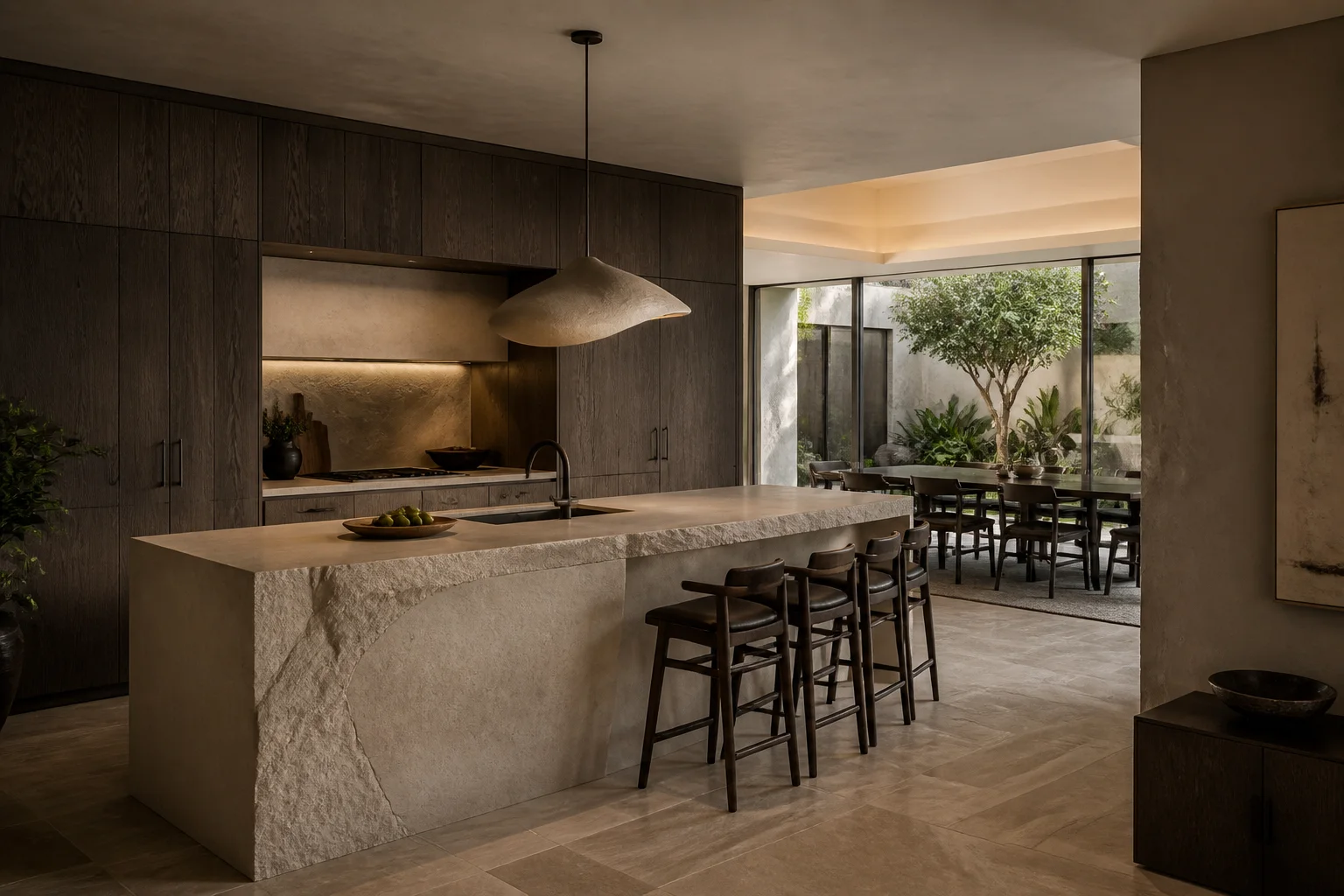
Emerald Deco Fluted with mirror-backed bays Crockery Unit Design
Fluting, fans and geometry. Lacquered colour, brass inlay lines and mirror used as architecture. A crockery unit is a display problem and a storage problem at once. What goes behind glass has to earn it; everything else gets a door.
Specification
Crockery Unit design details
| Detail | Specification |
|---|---|
| Layout | Fluted with mirror-backed bays |
| Style | Art Deco Glam |
| Palette | Emerald · Brass · Lacquer |
| Body | Emerald lacquer with brass |
| Doors | Fluted glass in a brass frame |
| Interior | Mirror-backed with brass rails |
| Lighting | Brass-trimmed bay lighting |
| Home size | Room dimension |
|---|---|
| 1 BHK | 3×6 feet wall-hung |
| 2 BHK | 4×7 feet |
| 3 BHK | 6×8 feet |
| 4 BHK | 8×9 feet full height |
| 4+ BHK / Villa | 10×9 feet with a bar |
Storage features
- Mirror-backed display bays
- A stemware rack
- A lacquered drawer bank
Special features
- Fluted glass in brass frames
- Mirror-backed bays
- A stemware rack as part of the composition
Ideal forDining rooms doubling as an entertaining space
Compare
The same crockery unit in the other five styles
One brief, six resolutions. Each carries its own layout, material specification and storage strategy.
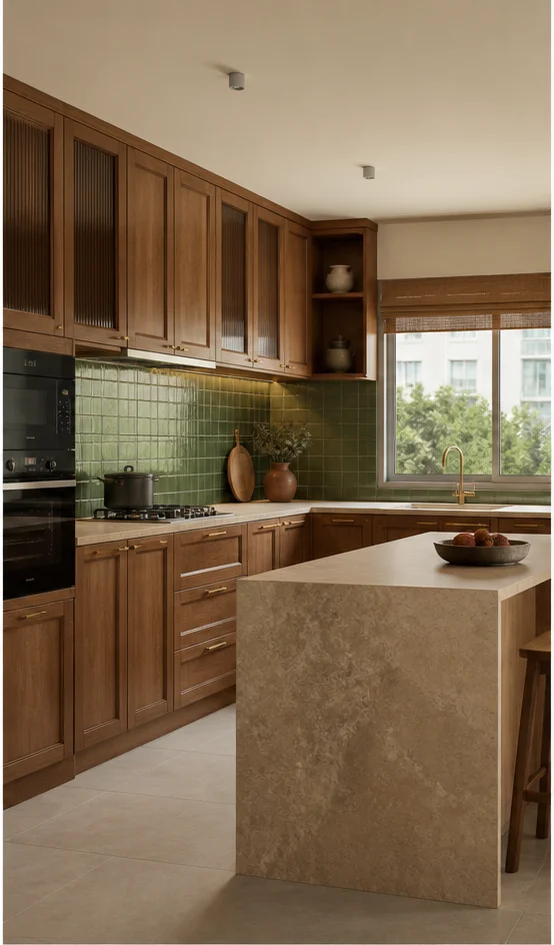
Minimal Wall-hung glass display Crockery Unit
Chalk · Pale Oak · Linen
See this designBold Dark full-height with lit bays Crockery Unit
Charcoal · Oxblood · Smoked Oak
See this design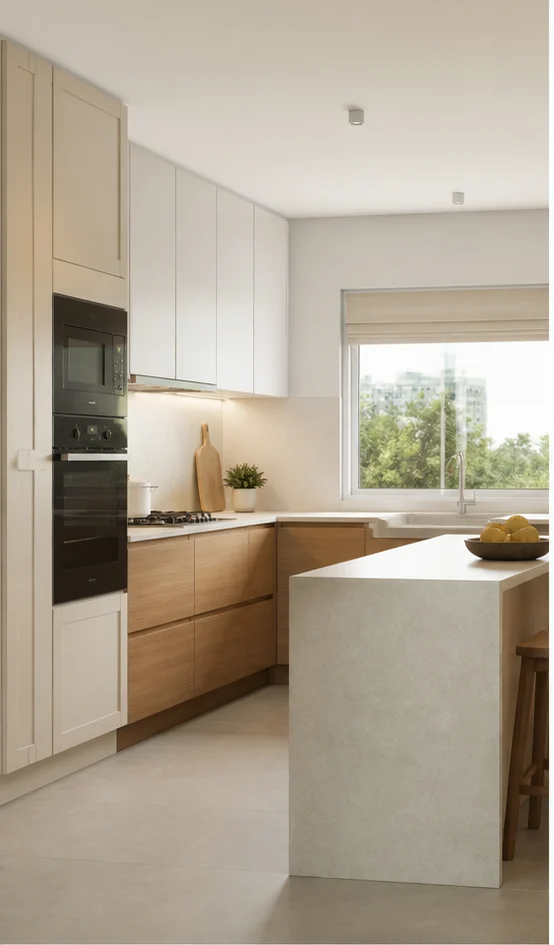
Heritage Teak with cane and glass Crockery Unit
Teak · Cane · Antique Brass
See this design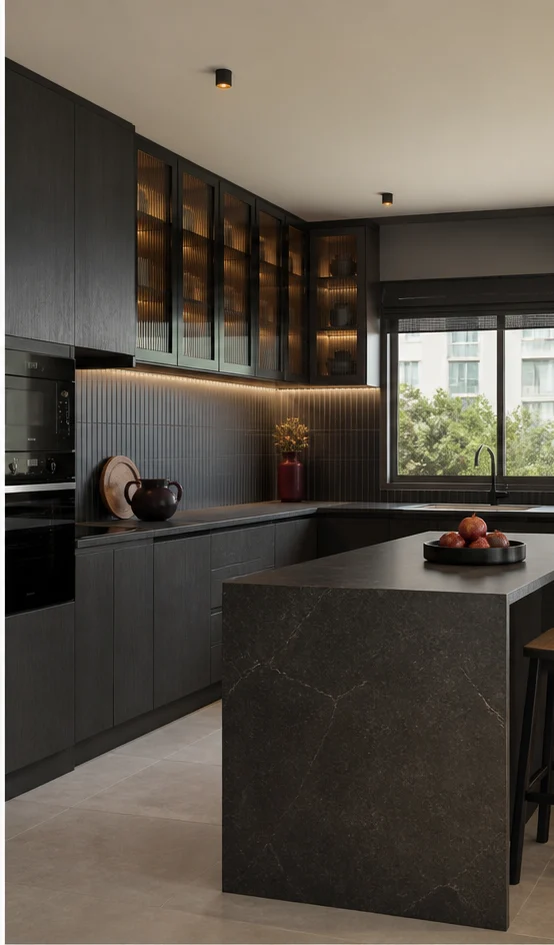
Classic Glazed classic with a gilt bead Crockery Unit
Ivory · Statuario · Gold
See this designScandi Birch open shelving Crockery Unit
Birch · Chalk · Sage
See this designQuestions
Crockery Unit questions
What should actually go behind glass?
Things that look better in a set — glassware, a dinner service, brass. Daily mismatched crockery behind glass just makes the unit look untidy; give it a door.
Does a crockery unit need lighting?
If it is glazed, yes. A concealed strip at the front edge of each shelf lights the contents rather than the back panel, which is what makes a display read.
How deep should a crockery unit be?
300–350mm for display and everyday crockery, 450mm for the base if it needs to take large platters and appliances. A stepped unit — deep below, shallow above — works best.
Can it be combined with a bar?
It is one of the better combinations. Put stemware and bottles in the lit glazed section and the everyday storage in the closed base.
Next step
Build this crockery unit.
Send the floor plan and the room dimensions. We come back with this design adapted to your space and priced line by line.