Design ideas
Crockery Unit Designs
A crockery unit is a display problem and a storage problem at once. What goes behind glass has to earn it; everything else gets a door.
Six styles
Crockery Unit designs in six house styles
The same brief, resolved six ways. Each one carries its own layout, material specification and storage strategy. Filter to one style, or compare all six.
Chalk Minimal Wall-hung glass display Crockery Unit Design
Nothing decorative survives unless it also does work. Long uninterrupted planes, shadow-gap joints, one quiet grain.
- Layout
- Wall-hung glass display
- Style
- Serene Minimal
- Palette
- Chalk · Pale Oak · Linen
- Body
- Chalk laminate, wall-hung
- Doors
- Frameless clear glass
- Interior
- Pale grey melamine, unlit
- Lighting
- None — daylight only
- Room dimension
- 6×8 feet
Storage features
- Two glazed shelves above, closed storage below
- A drawer for table linen
- A base cabinet for serving dishes
Special features
- Frameless glass so only the contents read
- Closed storage below keeping the clutter invisible
- Wall-hung, floor left clear
Ideal forCompact dining areas needing display without bulk
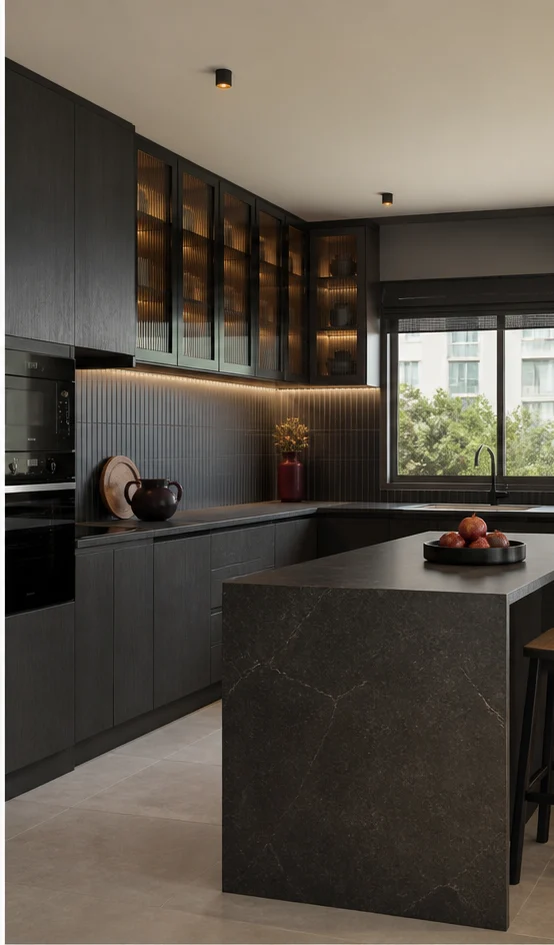
Charcoal Bold Dark full-height with lit bays Crockery Unit Design
High contrast, confident mass, a single saturated move per room. Dark joinery held against light stone.
- Layout
- Dark full-height with lit bays
- Style
- Bold Contemporary
- Palette
- Charcoal · Oxblood · Smoked Oak
- Body
- Charcoal veneer, full height
- Doors
- Bronze-tinted glass in a black frame
- Interior
- Charcoal with a lit shelf edge
- Lighting
- Concealed LED under each shelf
- Room dimension
- 6×8 feet
Storage features
- Full-height storage with lit display bays
- Deep base drawers
- A concealed bar section
Special features
- Bronze-tinted glass in a slim black frame
- Each bay lit from a concealed shelf-edge strip
- A dark mass against a pale wall
Ideal forLarger dining rooms wanting a full-height storage wall
Teak Heritage Teak with cane and glass Crockery Unit Design
Indian craft detailing on a contemporary frame — jaali, cane, inlay and hand-finished brass, used sparingly.
- Layout
- Teak with cane and glass
- Style
- Modern Heritage
- Palette
- Teak · Cane · Antique Brass
- Body
- Solid teak frame
- Doors
- Cane below, clear glass above
- Interior
- Cane-lined shelves
- Lighting
- Warm strip behind the cane
- Room dimension
- 6×8 feet
Storage features
- Cane-fronted base doors
- Open teak shelves for brass serveware
- A drawer for cutlery
Special features
- Cane below and clear glass above
- Warm light behind the cane
- Brass serveware on open teak shelves
Ideal forHomes with brass and traditional serveware to show
Ivory Classic Glazed classic with a gilt bead Crockery Unit Design
Proportioned panelling, cornice and moulding, book-matched stone and warm gilt detail on ivory.
- Layout
- Glazed classic with a gilt bead
- Style
- Classic Luxe
- Palette
- Ivory · Statuario · Gold
- Body
- Ivory PU with mouldings
- Doors
- Glazed with a gilt astragal
- Interior
- Ivory with a mirrored back
- Lighting
- Small picture lights in each bay
- Room dimension
- 6×8 feet
Storage features
- A glazed upper for the dinner service
- Silver storage in a lined drawer
- Concealed plinth storage
Special features
- A gilt astragal dividing the glazing
- Picture lights in each bay
- A mirrored back doubling the display
Ideal forFormal dining rooms with a dinner service
Birch Scandi Birch open shelving Crockery Unit Design
Pale timber, soft daylight and muted green — Nordic restraint adapted for Indian light, dust and humidity.
- Layout
- Birch open shelving
- Style
- Indo-Scandinavian
- Palette
- Birch · Chalk · Sage
- Body
- Birch ply, open
- Doors
- None — open shelving
- Interior
- Birch, natural
- Lighting
- None
- Room dimension
- 6×8 feet
Storage features
- Open birch shelves for daily crockery
- A basket drawer
- A lower cabinet for appliances
Special features
- Fully open birch shelving
- Daily crockery treated as the display
- Nothing hidden, nothing precious
Ideal forFamily kitchens wanting everything within reach
Emerald Deco Fluted with mirror-backed bays Crockery Unit Design
Fluting, fans and geometry. Lacquered colour, brass inlay lines and mirror used as architecture.
- Layout
- Fluted with mirror-backed bays
- Style
- Art Deco Glam
- Palette
- Emerald · Brass · Lacquer
- Body
- Emerald lacquer with brass
- Doors
- Fluted glass in a brass frame
- Interior
- Mirror-backed with brass rails
- Lighting
- Brass-trimmed bay lighting
- Room dimension
- 6×8 feet
Storage features
- Mirror-backed display bays
- A stemware rack
- A lacquered drawer bank
Special features
- Fluted glass in brass frames
- Mirror-backed bays
- A stemware rack as part of the composition
Ideal forDining rooms doubling as an entertaining space
Every design, in full
Six crockery unit designs, one page each
Each of the six carries its own page with the complete specification, sizing table and answers.
Minimal Wall-hung glass display Crockery Unit
Chalk · Pale Oak · Linen
See this designBold Dark full-height with lit bays Crockery Unit
Charcoal · Oxblood · Smoked Oak
See this designHeritage Teak with cane and glass Crockery Unit
Teak · Cane · Antique Brass
See this designClassic Glazed classic with a gilt bead Crockery Unit
Ivory · Statuario · Gold
See this designScandi Birch open shelving Crockery Unit
Birch · Chalk · Sage
See this designDeco Fluted with mirror-backed bays Crockery Unit
Emerald · Brass · Lacquer
See this designSizing
Crockery Unit dimensions by home size
The room dimension quoted on each design above is the 3 BHK figure. These are the sizes we most often work to.
| Home size | Typical room dimension | Layout that usually fits |
|---|---|---|
| 1 BHK | 3×6 feet wall-hung | Wall-hung glass display |
| 2 BHK | 4×7 feet | Dark full-height with lit bays |
| 3 BHK | 6×8 feet | Teak with cane and glass |
| 4 BHK | 8×9 feet full height | Glazed classic with a gilt bead |
| 4+ BHK / Villa | 10×9 feet with a bar | Birch open shelving |
Questions
Crockery Unit questions, answered
What should actually go behind glass?
Things that look better in a set — glassware, a dinner service, brass. Daily mismatched crockery behind glass just makes the unit look untidy; give it a door.
Does a crockery unit need lighting?
If it is glazed, yes. A concealed strip at the front edge of each shelf lights the contents rather than the back panel, which is what makes a display read.
How deep should a crockery unit be?
300–350mm for display and everyday crockery, 450mm for the base if it needs to take large platters and appliances. A stepped unit — deep below, shallow above — works best.
Can it be combined with a bar?
It is one of the better combinations. Put stemware and bottles in the lit glazed section and the everyday storage in the closed base.
Next step
Get your crockery unit designed.
Send the floor plan and the dimensions. We come back with a layout, a material direction and a line-by-line estimate.