Hardware and fittings
Lift-Up Systems
Lift-Up Systems, planned around how the room is used before how it looks — layout, hardware, services and the six house styles we draw it in.
Overview
Lift-Up Systems, in plain specification
Written for the decision, not for the mood board.
A good lift-up systems is invisible in use — everything within reach, nothing in the way, no door fouling another. Achieving that is a matter of dimensions and hardware rather than of style, which is why the specification table below matters more than the photographs.
Lift-Up Systems is engineered before it is styled. The layout, the services behind it, the hardware carrying it and the clearances around it all get resolved on a drawing long before a finish is picked. Done in that order, the finish becomes a free choice. Done in reverse, the finish becomes a compromise.
Two homes can specify lift-up systems identically and get different results, because site conditions differ: slab level, wall plumb, humidity, water hardness and how the household lives. The specification is a starting point that we adjust against the survey.
Six house styles
Lift-Up Systems in six personalities
The same brief resolved six ways. Each carries its own material, finish and detailing.
Minimal Lift-Up Systems
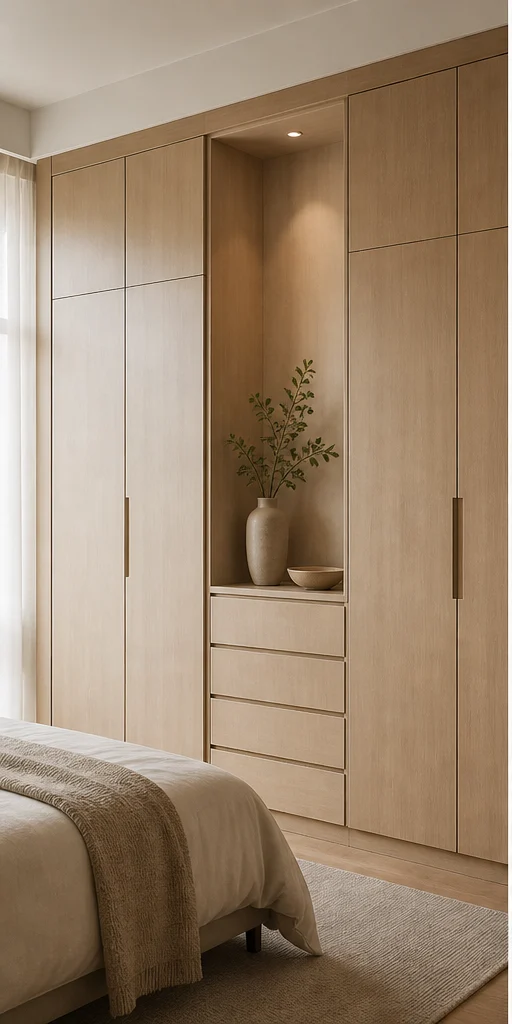
Serene Minimal treats lift-up systems as chalk · pale oak · linen: nothing decorative survives unless it also does work. Load rating: 40kg per drawer. Cycle test: 60,000 cycles. Action: Soft close.
See this style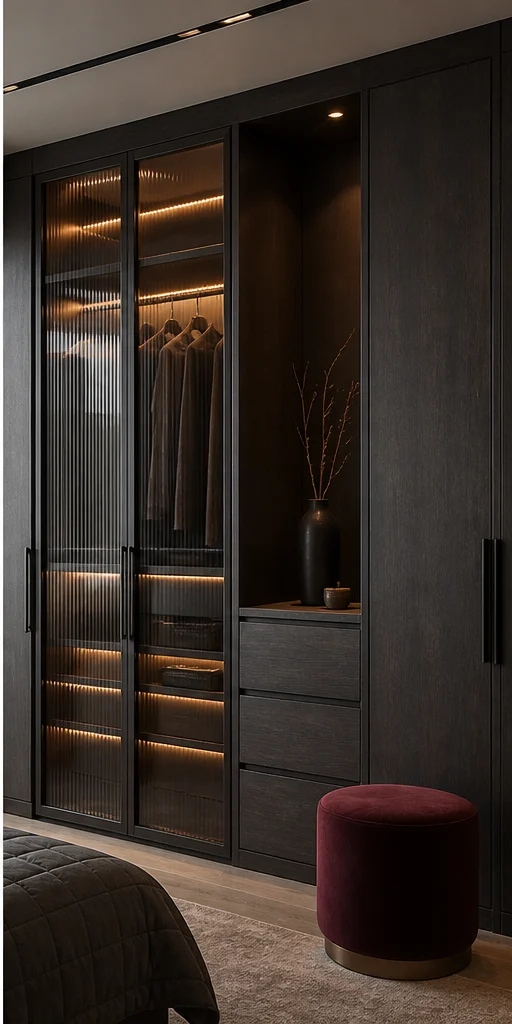
Bold Lift-Up Systems
Bold Contemporary treats lift-up systems as charcoal · oxblood · smoked oak: high contrast, confident mass, a single saturated move per room. Load rating: 50kg per drawer. Cycle test: 100,000 cycles. Action: Push to open, soft close.
See this styleHeritage Lift-Up Systems
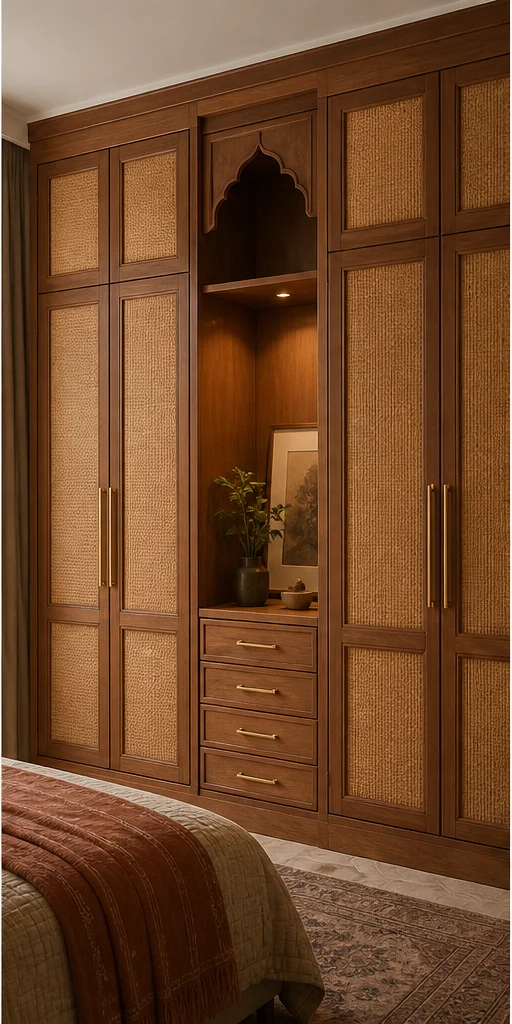
Modern Heritage treats lift-up systems as teak · cane · antique brass: indian craft detailing on a contemporary frame — jaali, cane, inlay and hand-finished brass, used sparingly. Load rating: 35kg. Cycle test: 60,000 cycles. Action: Traditional, damped.
See this style Photo: flooringclarity · BY 2.0
Classic Lift-Up Systems
Classic Luxe treats lift-up systems as ivory · statuario · gold: proportioned panelling, cornice and moulding, book-matched stone and warm gilt detail on ivory. Load rating: 40kg. Cycle test: 80,000 cycles. Action: Soft close.
See this style Photo: VillaEarlySunset · BY 2.0
Scandi Lift-Up Systems
Indo-Scandinavian treats lift-up systems as birch · chalk · sage: pale timber, soft daylight and muted green — nordic restraint adapted for indian light, dust and humidity. Load rating: 40kg. Cycle test: 60,000 cycles. Action: Soft close.
See this style Photo: andrechinn · BY 2.0
Deco Lift-Up Systems
Art Deco Glam treats lift-up systems as emerald · brass · lacquer: fluting, fans and geometry. Load rating: 50kg. Cycle test: 100,000 cycles. Action: Soft close with servo.
See this styleSpecification
Lift-Up Systems specification, style by style
This is the table we issue to the factory and the site. It is also what a warranty is enforced against, which is why it reads in grades and dimensions.
| Specification | Minimal | Bold | Heritage | Classic | Scandi | Deco |
|---|---|---|---|---|---|---|
| Material | Zinc alloy, satin nickel | SS 304, brushed | Solid brass, antique | Zinc alloy, brushed brass | Aluminium, matt | Solid brass, PVD gold |
| Load rating | 40kg per drawer | 50kg per drawer | 35kg | 40kg | 40kg | 50kg |
| Cycle test | 60,000 cycles | 100,000 cycles | 60,000 cycles | 80,000 cycles | 60,000 cycles | 100,000 cycles |
| Action | Soft close | Push to open, soft close | Traditional, damped | Soft close | Soft close | Soft close with servo |
| Corrosion class | Grade 3 | Grade 4, coastal | Grade 3 | Grade 3 | Grade 3 | Grade 4 |
| Adjustment | Three-way | Three-way with tool-free clip | Two-way | Three-way | Three-way | Three-way |
| Finish | Satin nickel | Brushed steel | Antique brass | Brushed brass | Matt black | PVD gold |
| Warranty | 10 years | Lifetime | 10 years | Lifetime | 10 years | Lifetime |
Before you commit
How to choose lift-up systems
Six checks that prevent the failures we are most often called to fix.
- Specify hardware by brand and model number in the contract. 'Soft-close hinges' as a line item means nothing and is where quotes are quietly cut.
- Match the corrosion grade to the city. Coastal homes need a higher grade on every hinge, runner and handle, especially in kitchens and bathrooms.
- Check the load rating against real use. A drawer full of steel utensils is heavier than any showroom drawer.
- Feel the action at full extension, not at the last inch. Cheap runners feel identical when nearly closed.
- Confirm spare-part availability. Hardware is the part of an interior most likely to need service in year five.
- Keep one finish family across the home. Mixed metal finishes look unresolved unless the mixing is deliberate and consistent.
Bangalore
Lift-Up Systems in Bangalore
What the city's climate, water, housing stock and society rules mean for this specification.
Working in Bangalore means working around two practical constraints more than around climate. Apartment societies restrict working hours, service-lift access and debris removal; and the new high-rise stock along the eastern corridor is handed over as a bare shell, so lift-up systems arrives at the same time as every other trade.
The mild climate is a genuine advantage: solid timber and veneer move far less here than in Delhi or Chennai, which makes craft detailing more durable and more affordable than it would be elsewhere. It is one of the few Indian cities where that is true year-round.
Hard borewell water in Whitefield, Sarjapur Road, Hebbal and Yelahanka leaves scale on glass, chrome and stone within months. Where the supply is hard we specify surfaces and fittings that tolerate it, and we tell the family the honest maintenance routine rather than leaving them to discover it.
Most societies here allow work between roughly 9am and 6pm, restrict Sundays, require a service-lift booking and hold a debris deposit. That schedule is written into the programme at the start, because a plan that assumes twelve working hours a day will slip in its first week.
We survey in Bangalore at no charge, take our own dimensions and come back with a layout, a material direction and a line-by-line estimate.
Sizing
Lift-Up Systems by home size
Sizing below is what we plan lift-up systems to in each home size. These are working dimensions from completed projects, not catalogue minimums.
| Home size | Typical scope | Planning note |
|---|---|---|
| 1 BHK | Compact, single run | Compact planning, one clear gesture |
| 2 BHK | Standard, two runs | Standard scope, most common brief |
| 3 BHK | Full specification | Full scope with storage planned in litres |
| 4 BHK | Extended with island or dresser | Extended scope, bespoke elements |
| 4+ BHK / Villa | Bespoke, villa scale | Villa scale, bespoke throughout |
Cost
What moves the price of lift-up systems
We quote line by line rather than per square foot, because these are the items that actually differ between two estimates.
- Brand and cycle rating, which is what you are actually buying.
- Corrosion grade for coastal cities.
- Quantity of drawers versus shelves.
- Specialist systems — pull-downs, lift-ups, corner mechanisms — which are priced per unit and add up fast.
- Finish: PVD and solid brass sit well above plated zinc.
Process
How the work runs
Five stages, with the decisions each one locks.
We measure the space ourselves rather than working from the builder's drawing, note the services, water quality, daylight and society rules, and write down how the room is actually used. Lift-Up Systems is specified against that survey, not against a catalogue.
Plans, elevations and details, with the specification written as grades and dimensions. You approve an elevation, not a render — this is the stage where changes cost nothing.
Material, finish, hardware and services are locked, and the estimate becomes a line-by-line document. We tell you exactly what this date locks and what can still change afterwards.
Factory production runs to the approved drawing while site work is prepared. Material is checked against the approved sample on arrival, in daylight, and stored correctly until the programme calls for it.
Installation, testing, snagging and a documentation file with drawings, warranties, decor codes and hardware models. A first-year service visit is scheduled at handover.
Living with it
Maintaining lift-up systems
The honest routine, and the mistakes that cost the most to undo.
Care and maintenance
- Wipe hardware with a dry cloth. Household cleaners strip the lacquer from brass and PVD finishes.
- Re-tighten fixings at the end of the first year, when everything has settled.
- Vacuum runner tracks and hinge cups annually.
- Replace a failing damper rather than the whole runner where the system allows it.
What goes wrong
- Downgrading hardware to hold the total, which is the single change most likely to be regretted.
- Using standard-grade fittings in a coastal kitchen.
- Mixing hardware brands within one run, which means two different adjustment systems for the carpenter.
- Forgetting to record models at handover, making service in year five a guessing game.
Detailing
Lift-Up Systems detailing notes
The small decisions that separate built work from assembled work.
Handleless profiles need a fixed reveal and precise alignment; they show every millimetre of error across a run.
Where a handle is used, set the height by hand position rather than by the shutter's centre line.
Push-to-open hardware and children are a poor combination in tall units; use it on drawers, not on wall cabinets.
Check the door swing clearance at internal corners before choosing a hinge angle — a 110-degree hinge in a corner run will collide.
Questions
Lift-Up Systems — answered
Does hardware quality really change the result?
It is the most-touched part of an interior and the first to fail. Two kitchens with identical shutters feel completely different if one has 100,000-cycle runners and the other has unbranded ones.
What should I specify for a coastal home?
A higher corrosion grade throughout, stainless or PVD-finished exposed parts, and an annual dry-wipe routine. Standard zinc plating pits within two years in salt air.
Is soft-close worth it everywhere?
On drawers and doors, yes — it protects the joinery as much as the ears. On a rarely used loft shutter it is not.
Can hardware be replaced later?
Yes, if the model is recorded and the drilling pattern is standard. This is why we hand over a hardware schedule with model numbers at project close.
How long does Lift-Up Systems last?
Ten to twenty years in normal domestic use for a good-quality fitting. Dampers are the usual first service item and are replaceable on their own.
Should the finish match across the house?
Keep one family per floor at minimum. Mixing finishes works only when it is clearly deliberate — for example brass in the wet areas and matt black elsewhere.
Do you work on lift-up systems projects across Bangalore?
Yes — Bangalore is where most of our projects are, from apartments along Sarjapur Road, Whitefield and Hebbal to independent homes in Jayanagar, Indiranagar and Malleshwaram. We survey the space ourselves, work within the society's access and working-hour rules, and hand over with a documentation file. There is a dedicated page for our work in the city if you want the full picture.
Does Bangalore's climate or water affect this choice?
The climate helps and the water does not. Mild year-round temperatures are kinder to timber and joinery than almost any other Indian city, so craft detailing lasts. Hard borewell water in the eastern and northern corridors is the real constraint — it scales glass, chrome and stone, and it changes what we specify and what maintenance we ask the family to commit to.
Explore more
More in Furniture Hardware
Related pages
Next step
Planning lift-up systems for your home?
Send your floor plan and we come back with a layout, a material direction and a line-by-line estimate. Free survey across Bangalore.