Tile · Art Deco Glam
Emerald Deco Chequer and geometric inlay Tile Design
Fluting, fans and geometry. Lacquered colour, brass inlay lines and mirror used as architecture. Tile is the cheapest way to change how a room reads and the most expensive to get wrong. Setting-out matters more than the tile you pick.
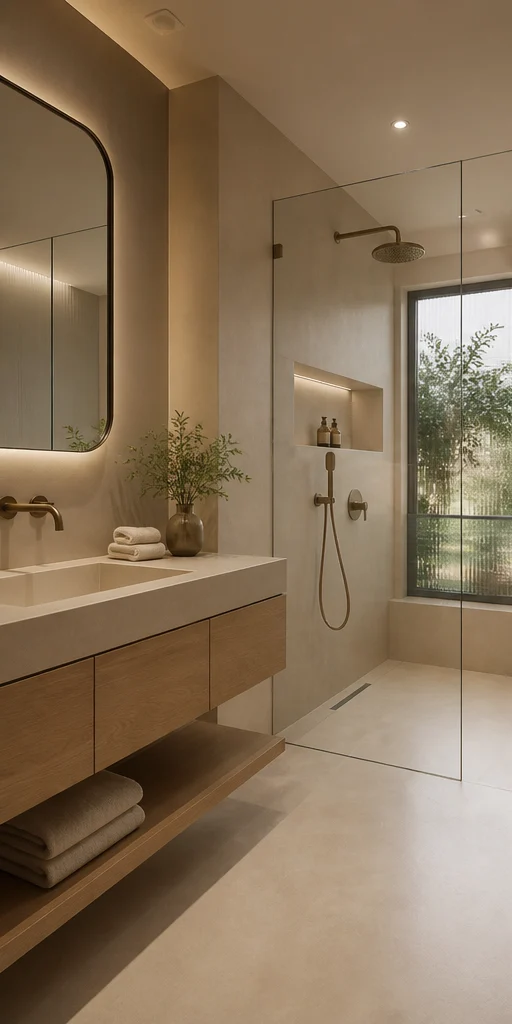
Specification
Tile design details
| Detail | Specification |
|---|---|
| Layout | Chequer and geometric inlay |
| Style | Art Deco Glam |
| Palette | Emerald · Brass · Lacquer |
| Format | 200×200 chequer with a border |
| Finish | Gloss chequer with a brass inlay |
| Grout | Brass strip between fields |
| Layout | Diagonal chequer with a border |
| Home size | Room dimension |
|---|---|
| 1 BHK | Bathroom only |
| 2 BHK | Bathroom and kitchen splashback |
| 3 BHK | Full wet areas plus the foyer |
| 4 BHK | All wet areas and formal floors |
| 4+ BHK / Villa | Full-home tile scheme |
Storage features
- A chequer floor with a contrasting border
- A brass inlay strip
- A geometric feature panel
Special features
- A chequerboard laid on the diagonal
- A brass inlay strip dividing fields
- A geometric border framing the room
Ideal forStatement powder rooms, foyers and bar areas
Compare
The same tile in the other five styles
One brief, six resolutions. Each carries its own layout, material specification and storage strategy.
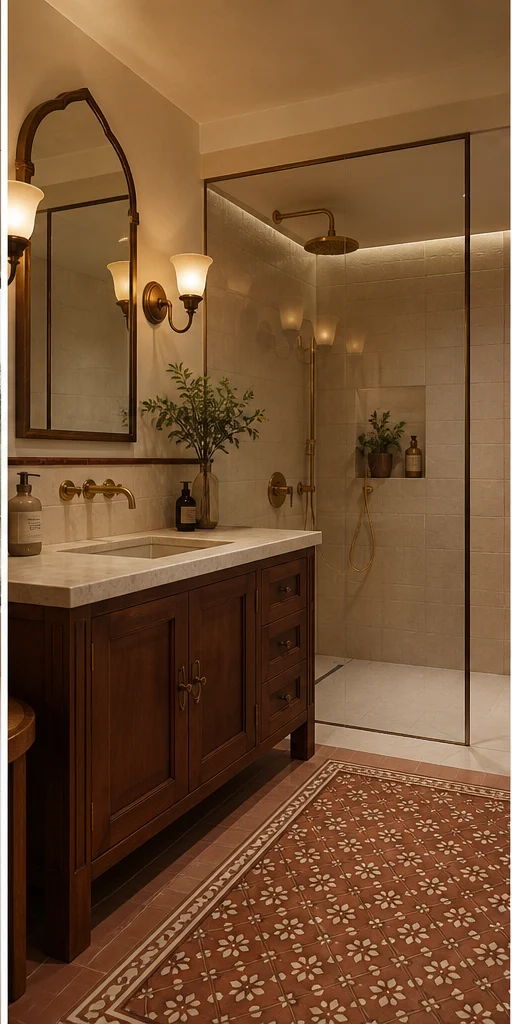
Minimal Large-format, minimal joint Tile
Chalk · Pale Oak · Linen
See this designBold Ribbed charcoal, stack bond Tile
Charcoal · Oxblood · Smoked Oak
See this design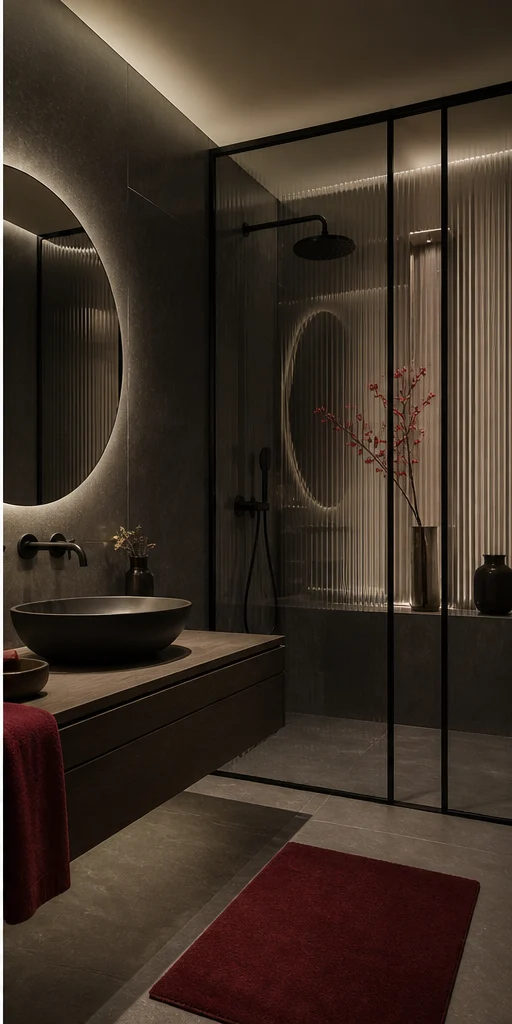
Heritage Handmade zellige Tile
Teak · Cane · Antique Brass
See this designClassic Book-matched slab Tile
Ivory · Statuario · Gold
See this designScandi Subway, vertical stack Tile
Birch · Chalk · Sage
See this designQuestions
Tile questions
How do I set out tile so it does not end on a sliver?
Start from the most visible corner and centre the field, so the cuts land equally at both ends and are never less than half a tile. Dry-lay the first row before fixing anything.
Should grout match or contrast?
Match it if you want the surface to read as one plane; contrast it if the pattern is the point. In kitchens and bathrooms use epoxy grout either way — it does not stain or harbour mould.
Can large-format tile go on walls?
Yes, with the right adhesive and back-buttering, and mechanical support for anything above about 1.2m in a single piece. It gives you far fewer joints, which is usually the goal.
Are handmade tiles harder to maintain?
The glaze is durable but the uneven surface holds more grease behind a hob. They are a beautiful choice for a splashback and a poor one for a shower floor.
Next step
Build this tile.
Send the floor plan and the room dimensions. We come back with this design adapted to your space and priced line by line.